“Go therefore and make disciples of all the nations…teaching them to observe all that I commanded you; and lo, I am with you always, even to the end of the age” (Matthew 28:19-20, NASB).
——————–
Contents:
1) The Sufferings of Jesus (From Gethsemane to Calvary) (Bryan Gibson)
2) Is it Narrow Minded? (Jere Frost)
——————–
-1-
The Sufferings of Jesus
(From Gethsemane to Calvary)
Bryan Gibson
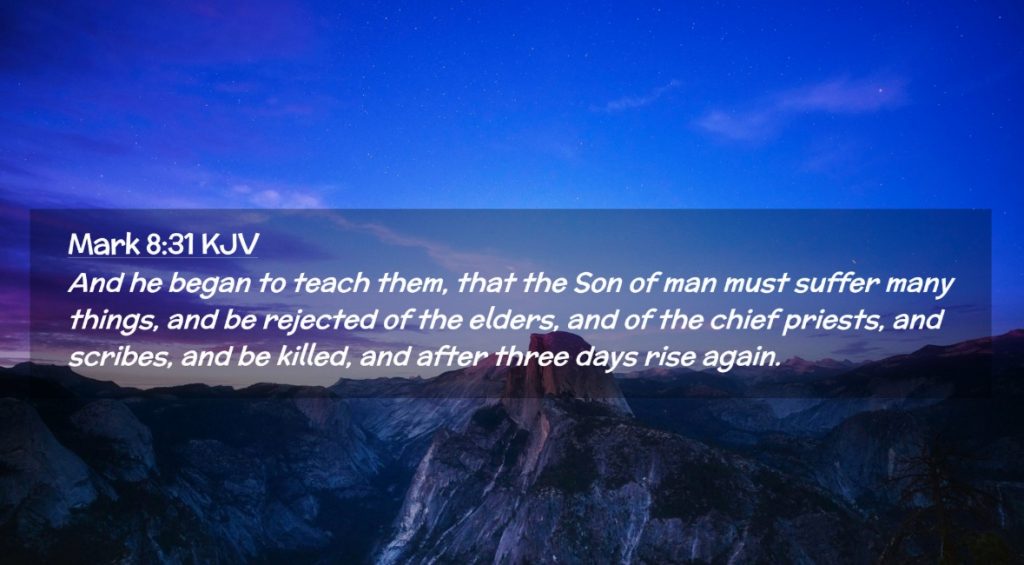
Troubled and deeply distressed in the Garden of Gethsemane, Jesus made this request of His disciples, “My soul is exceedingly sorrowful, even to death. Stay here and watch with Me.” Instead of watching, they went to sleep (Mk. 14:33-34, 37-41; Matt. 26:37-38).
After this request, Jesus went about a stone’s throw away from His disciples, fell on His face and prayed, “O My Father, if it is possible, let this cup pass from Me; nevertheless, not as I will, but as You will.” Jesus continued to be in agony, His sweat becoming as great drops of blood. He began to pray even more earnestly, praying a second time to His Father, and a third (Matt. 26:36-44; Lk. 22:39-44).
While still speaking with His disciples in the Garden, a great multitude with swords and clubs came to arrest Him. Leading the mob was one of the chosen twelve, Judas Iscariot. Judas approached Jesus, extended Him greetings, and kissed Him. This kiss, however, was a kiss of betrayal, because He had already given the mob a sign, saying, “Whomever I kiss, He is the One; seize Him” (Matt. 26:47-50).
After His arrest, all His disciples forsook Him and fled (Matt. 26:56).
Bound by soldiers, Jesus was led first to the house of Annas, the father-in-law of Caiphas, the high priest. During this appearance before Annas, an officer struck Jesus with the palm of his hand (Jn. 18:12-13, 22).
Jesus was then sent to Caiphas, still bound. The whole council was also present. False testimony was sought against Jesus. They spat in His face and beat Him. They blindfolded Him, struck Him with the palms of their hands, and then mocked Him by saying, “Prophesy to us Christ. Who struck you?” They spoke many other blasphemous things against Him (Jn. 18:24; Matt. 26:57-68; Mk. 14:65; Lk. 22:65).
Meanwhile, Peter, who had followed Jesus to see what would happen to Him, was asked three different times if he knew Jesus, or had been with Him. Peter denied knowing Jesus all three times. After the third denial Jesus turned and looked at Peter (Lk. 22:54-61; Matt. 26:58).
When dawn arrived, Jesus was brought before the council again. When Jesus affirmed He was the Son of God, they had heard enough. He was charged with blasphemy (Lk. 22:66-71).
Jesus was then brought before Pilate, the Roman governor over Judea. When Pilate said, “Take him and judge Him according to your own law,” they responded, “It is not lawful for us to put anyone to death.” They were hoping for a death sentence from Pilate (Jn. 18:28-31; Lk. 23:1-5).
Jesus was then sent to appear before Herod. During this appearance, the chief priests and scribes stood and vehemently accused Jesus. Herod’s soldiers treated Him with contempt, arrayed Him in a gorgeous robe and mocked Him (Lk. 23:6-12).
Jesus was then sent back to Pilate for a second time. It was customary for the Romans, during the Passover, to release one prisoner, whomever the Jews might desire. Pilate gave them a choice, Jesus or Barabbas, a man charged with rebellion and murder. The people said, “Release unto us Barabbas.” When Pilate then asked what should be done with Jesus, the people shouted, “Crucify Him” (Matt. 27:15-23; Lk. 23:13-21).
Pilate then sent Jesus away to be scourged (Jn. 19:1). The scourge was a whip with a handle and several lashes. Bits of metal and bone were often embedded in the lashes. This scourge was typically applied to the back of the victim, in this case, Jesus.
After the scourging, Pilate’s soldiers twisted a crown of thorns and placed it on Jesus’ head. They stripped Him and put a purple robe on Him. They placed a reed in His right hand for a scepter and then mocked Him, saying, “Hail, King of the Jews.” These same soldiers spat on Him, took the reed out of His hand, and struck Him on the head with it (Jn. 19:2-3; Matt. 27:28-30).
Pilate then took Jesus and brought Him before the people again. He was still wearing the crown of thorns and the purple robe. Pilate said he could find no fault in Jesus, but they would not be appeased. They continued to demand with loud voices that Jesus be crucified. Pilate, wanting to please the crowd, released Barabbas and delivered Jesus to be crucified (Jn. 19:5-7; Lk. 23:23-25; Mk. 15:15).
Jesus started out bearing His own cross to Calvary, but soon a Cyrenian named Simon was compelled to carry it the rest of the way. Two criminals were led with Jesus to Calvary, both of whom would be crucified, one on His right hand and the other on His left (Lk. 23:26, 32-33; John 19:17).
When they reached the site of the crucifixion, Jesus was secured to the cross by nails driven through His hands and feet (Jn. 20:25, 27; Luke 24:38-40).
While on the cross, those passing by blasphemed Jesus with statements like these:
“You who destroy the temple and build it in three days, save Yourself” (Matt. 27:39-40).
“If you are the Son of God, come down from the cross” (Matt. 27:40).
“He saved others, Himself He cannot save” (Matt. 27:42).
“If He is the King of Israel, let Him come down from the cross, and we will believe Him” (Matt. 27:42).
“He trusted in God; let Him deliver Him now if He will have Him; for He said, ‘I am the Son of God’” (Matt. 27:43).
Even the thieves hanging beside Him reviled Him (Matt. 27:44). (Although one did later have a change of heart).
About the ninth hour Jesus cried out, “My God, My God, why have You forsaken Me?” Some thought He was calling for Elijah (Matt. 27:46-47).
About this same time Jesus also cried out, “I thirst.” Someone put a sponge on the end of a stalk of hyssop and dipped it in sour wine and lifted it to the lips of Jesus. Others said, “Leave Him alone; let us see if Elijah will come to save Him” (Jn. 19:28-29; Matt. 27:48-49).
Once again, Jesus cried with a loud voice saying, “It is finished.” And finally, “Father, into your hands I commit My spirit.” Having said this, Jesus bowed His head and “breathed His last” (Jn. 19:30; Lk. 23:46).
— Via Weekly Bulletin from the Prattmont church of Christ, July 6, 2025
——————–

-2-
Is it Narrow Minded?
Jere Frost
I don’t know about you, but I get a little weary of hearing the word “narrow” used as a slur against preachers who adhere to the Bible in their preaching. Sure they are “narrow,” but so are factory workers, surgeons, druggists, and teachers.
The factory worker is so “narrow” that he uses micrometers and measures to the thousandth of an inch the bores and pistons of engines, electronic components and balancing wheels in timepieces.
The surgeon is so “narrow” that he insists on ultra-technical laboratory analysis and meticulously sterilized instruments of special design. Why is he so “picky narrow” that he makes his assistants wear cloths over their faces?
The druggist is so “narrow” that he just has to have a prescription before he will let you have certain drugs. He says he has to be “narrow” because government regulations are narrow, and even thinks it is for your good!
As you think about it, it’s a blessing that somebody is “narrow-minded.” And however much we need to be narrow about vital material matters we must be infinitely more careful and exact about spiritual laws. God will not be mocked!
— Via Articles from the Knollwood church of Christ, December 2025
——————–
The Steps That Lead to Eternal Salvation
1) Hear the gospel — for that is how faith comes (Rom. 10:17; John 20:30-31).
2) Believe in the deity of Jesus Christ, the Son of God (John 8:24; John 3:18).
3) Repent of sins. For every accountable person has sinned (Romans 3:23; Romans 3:10), which causes one to be spiritually dead (Ephesians 2:1) and separated from God (Isaiah 59:1-2; Romans 6:23). Therefore, repentance of sin is necessary (Luke 13:5; Acts 17:30). For whether the sin seems great or small, there will still be the same penalty for either (Matt. 12:36-37; 2 Cor. 5:10) — and even for a lie (Rev. 21:8).
4) Confess faith in Christ (Rom. 10:9-10; Acts 8:36-38).
5) Be baptized in water for the remission of sins (Mark 16:16; Acts 2:38; 22:16; 1 Pet. 3:21). This is the final step that puts one into Christ (Gal. 3:26-27). For from that baptism, one is then raised as a new creature (2 Cor. 5:17), having all sins forgiven and beginning a new life as a Christian (Rom. 6:3-4). For the one being baptized does so “through faith in the working of God” (Col. 2:12). In other words, believing that God will keep His word and forgive after one submits to these necessary steps. And now as a Christian, we then need to…
6) Continue in the faith by living for the Lord; for, if not, salvation can be lost (Matt. 24:13; Heb. 10:36-39; Rev. 2:10; 2 Pet. 2:20-22).
——————–
Tebeau Street
CHURCH OF CHRIST
1402 Tebeau Street, Waycross, GA 31501
Sunday: 9 a.m. Bible Classes and 10 a.m. Worship Service
Wednesday (all but the first): 7 p.m. Bible Classes
First Wednesday of the month: 7 p.m. Congregational Song Service (about 45 minutes of singing, followed by a short talk)
evangelist/editor: Tom Edwards (912) 281-9917
Tom@ThomasTEdwards.com
https://thomastedwards.com/go/all.htm (This is a link to the older version of the Gospel Observer website, but with bulletins going back to March 4, 1990.)