“Go therefore and make disciples of all the nations…teaching them to observe all that I commanded you; and lo, I am with you always, even to the end of the age” (Matthew 28:19-20, NASB).
——————–
Contents:
1) “God of All Comfort” (Bryan Gibson)
2) Some Bumper Stickers I Like (Bill Crews)
——————–
-1-
“God of All Comfort”
Bryan Gibson
What do you do when you’re like Paul—when you’re filled with anxiety for the souls of others; when you’re burdened beyond measure, almost to the point of death; when you’re troubled on every side, persecuted, and struck down; when you suffer stripes and imprisonments, tumults and sleeplessness; when you’re cold and naked, hungry and thirsty; when you’re attacked by false brethren; when things are so bad that you have no rest in your spirit and anguish in your heart (2 Corinthians 1:8; 2:1-4, 12-13; 4:8-9; 6:4-5; 7:5; 11:23-28)?
That’s enough to make anyone “lose heart,” but Paul didn’t (2 Corinthians 4:1, 16). Instead, he offered this perspective: “We are hard pressed on every side, yet not crushed; we are perplexed, but not in despair; persecuted, but not forsaken; struck down, but not destroyed” (2 Corinthians 4:8-9).
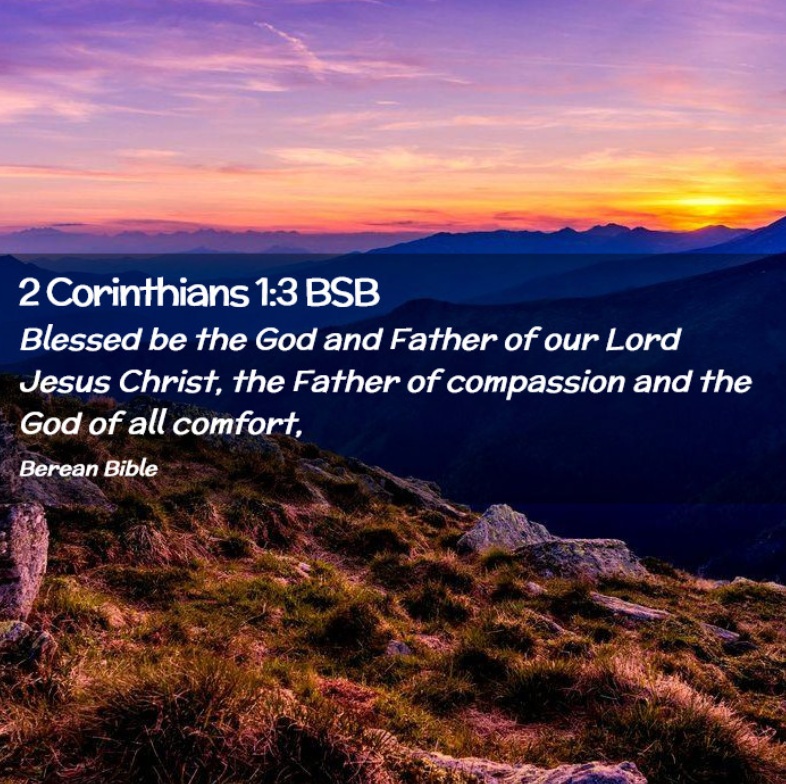
So what kept Paul going, what kept him from losing heart? The same thing that keeps us all going—the comfort which God alone can provide. And did Paul ever receive it: “Blessed be the God and Father of our Lord Jesus Christ, the Father of mercies and God of all comfort, who comforts us in all our affliction, so that we may be able to comfort those who are in any affliction, with the comfort with which we ourselves are comforted by God. For as we share abundantly in Christ’s sufferings, so through Christ we share abundantly in comfort too. If we are afflicted, it is for your comfort and salvation; and if we are comforted, it is for your comfort, which you experience when you patiently endure the same sufferings that we suffer. Our hope for you is unshaken, for we know that as you share in our sufferings, you will also share in our comfort” (2 Corinthians 1:3-7, ESV).
But exactly how did God comfort Paul? We may not know all the means God used, but we do know some, and they’re revealed in the first seven chapters of this same epistle. Let’s see how God did it, because it will help us understand how he comforts us, too.
By the coming of Titus, at just the right time. “Our bodies had no rest…we were troubled on every side. Outside were conflicts, inside were fears. Nevertheless God, who comforts the downcast, comforted us by the coming of Titus” (7:5-6). Wonder how many times we’ve had a faithful brother (or sister) come (or call, text, email, etc.) at just the right time?
By the love and encouragement of brethren. When Titus came, he brought comforting words concerning the Corinthians— that they still had affection for Paul; but more importantly, that efforts to lead them to repentance had been successful (7:7-12). Their obedience was a great source of joy and comfort to Paul (7:13-16), not to mention the prayers they offered on his behalf (1:11). Sound familiar? Let’s not grieve so long over the unfaithful (12:20-21) that we can’t find comfort in the faithful.
By giving him the opportunity to preach the glorious gospel of Christ. “Therefore, since we have this ministry…we do not lose heart” (4:1). And what an opportunity preaching provides—to diffuse the “fragrance of His knowledge in every place” (2:14), to reconcile men to God through Jesus Christ (5:18-21), to transform people into the image of Christ” (3:18), and to give them the hope of one day being “present with the Lord” (5:8). How comforting it is to know that whatever we suffer for preaching the gospel is absolutely worth it (1:6; 4:11- 15; 6:10).
By teaching him the love of Christ. “For the love of Christ compels us, because we judge thus: that if One died for all, then all died; and He died for all, that those who live should live no longer for themselves, but for Him who died for them and rose again” (2 Corinthians 5:14-15). If the love of Christ and the purpose it gives our life can’t keep us going, we’ve got a serious heart problem.
By offering him the hope of eternal life. “Therefore we do not lose heart…for our light affliction, which is but for a moment, is working for us a far more exceeding and eternal weight of glory, while we do not look at the things which are seen, but at the things which are not seen. For the things which are seen are temporary, but the things which are not seen are eternal” (2 Corinthians 4:16-18). That’s what suffering looks like—“light” and “but for a moment”—when you look through the lens of eternity.
“Blessed be the God and Father of our Lord Jesus Christ, the Father of mercies and God of all comfort” (2 Corinthians 1:3).
— via the Weekly Bulletin of the Prattmont church of Christ, February 16, 2025
——————–
-2-
Some Bumper Stickers I Like
Bill Crews
Everyone is supposed to know that “I” followed by a heart-shaped symbol means, “I love.” They have cropped out everywhere in the form of bumper and window stickers. “I love N.Y.” (or some other state). “I Love My Cat.” “I Love My Dog.” “I Love My Truck.” And so on without end. l was pleased to see one man’s car whose bumper sticker proclaimed, “I Love My Wife.” Good for him! The Bible says, “Husbands. love your wives, and be not bitter against them” (Colossians 3:19). Are wives to love their husbands? “That they may train the young women to love their husbands, to love their children” (Titus 2:4).
In our war on illegal drugs in this nation (a war we appear to be losing, even to this very day), we are using the slogan “Say No To Drugs.” Or we use the word “drugs” with a circle around it and a slanted line through it. Young people especially are being urged to say “no” to drugs. A so-called friend usually introduces them to a product that spells the end of a normal life, the beginning of a miserable life, ending, possibly, in death. This, too, has become a common bumper and window sticker.
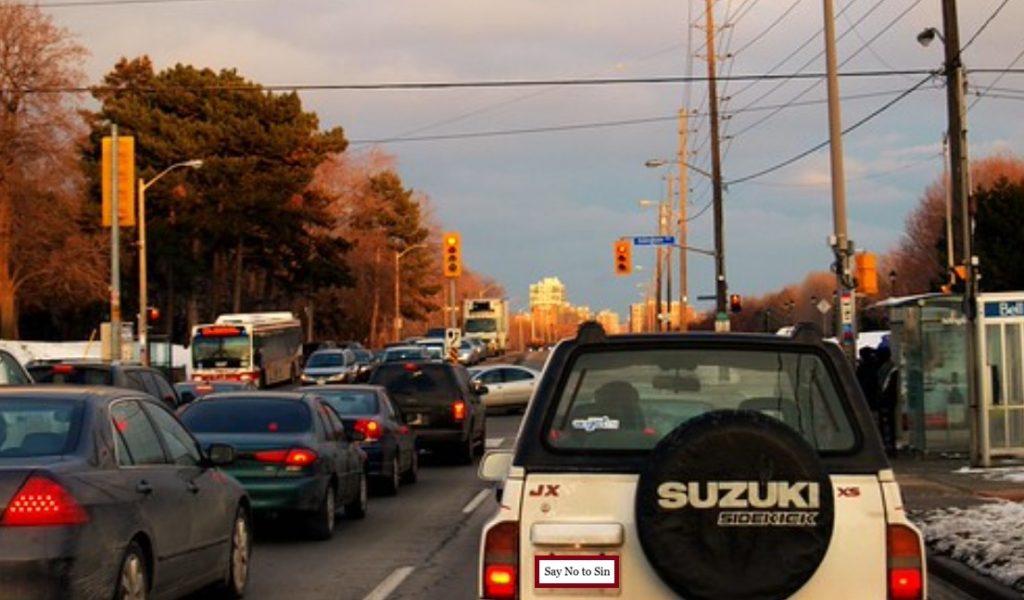
I saw a bumper sticker that read, “Say No To Sin.” How much better! And how much more our young people need to be taught this! It covers it all, illegal drugs and everything else that is illegal or immoral (whether legal or not). The Bible says, “Be subject therefore unto God; but resist the devil, and he will flee from you” (James 4:7). And, “Be sober, be watchful: your adversary the devil, as a roaring lion, walketh about, seeking whom he may devour, whom withstand stedfast in your faith, knowing that the same sufferings are accomplished in your brethren who are in the world” (1 Peter 5:8–9). And, “Flee fornication” (1 Corinthians 6:18). And, “Flee from idolatry” (1 Corinthians 10:14). And, “But flee youthful lusts, and follow after righteousness, faith, love, peace, with them that call on the Lord out of a pure heart” (2 Timothy 2:22). And, finally, “But thou, O man of God, flee these things; and follow after righteousness, godliness, faith, love, patience, meekness” (1 Timothy 6:11). Jesus said, “…For out of the abundance of the heart the mouth speaketh” (Matthew 12:34). He also said, “… every idle word that men shall speak, they shall give account thereof in the day of judgment” (Matthew 12:36). And He ended that discourse by saying, “For by thy words thou shalt be justified, and by thy words thou shalt be condemned” (Matthew 12:37). All of this applies equally to the signs we attach to our cars and SUVs as it does to the words that fall from our lips.
— via the Roanridge Reader, Volume 35, Issue 7, page 3, February 16, 2020
——————–
The Steps That Lead to Eternal Salvation
1) Hear the gospel — for that is how faith comes (Rom. 10:17; John 20:30-31).
2) Believe in the deity of Jesus Christ, the Son of God (John 8:24; John 3:18).
3) Repent of sins. For every accountable person has sinned (Romans 3:23; Romans 3:10), which causes one to be spiritually dead (Ephesians 2:1) and separated from God (Isaiah 59:1-2; Romans 6:23). Therefore, repentance of sin is necessary (Luke 13:5; Acts 17:30). For whether the sin seems great or small, there will still be the same penalty for either (Matt. 12:36-37; 2 Cor. 5:10) — and even for a lie (Rev. 21:8).
4) Confess faith in Christ (Rom. 10:9-10; Acts 8:36-38).
5) Be baptized in water for the remission of sins (Mark 16:16; Acts 2:38; 22:16; 1 Pet. 3:21). This is the final step that puts one into Christ (Gal. 3:26-27). For from that baptism, one is then raised as a new creature (2 Cor. 5:17), having all sins forgiven and beginning a new life as a Christian (Rom. 6:3-4). For the one being baptized does so “through faith in the working of God” (Col. 2:12). In other words, believing that God will keep His word and forgive after one submits to these necessary steps. And now as a Christian, we then need to…
6) Continue in the faith by living for the Lord; for, if not, salvation can be lost (Matt. 24:13; Heb. 10:36-39; Rev. 2:10; 2 Pet. 2:20-22).
——————–
Tebeau Street
CHURCH OF CHRIST
1402 Tebeau Street, Waycross, GA 31501
Sunday: 9 a.m. Bible Classes (except for last of the month Song Service)
and 10 a.m. Worship Service
Wednesday: 7 p.m. Bible Classes
evangelist/editor: Tom Edwards (912) 281-9917
Tom@ThomasTEdwards.com