“Go therefore and make disciples of all the nations…teaching them to observe all that I commanded you; and lo, I am with you always, even to the end of the age” (Matthew 28:19-20, NASB).
——————–
Contents:
1) The Deceitfulness of Sin (Bryan Gibson)
2) At the Crossroads (Doy Moyer)
——————–
-1-
The Deceitfulness of Sin
Bryan Gibson
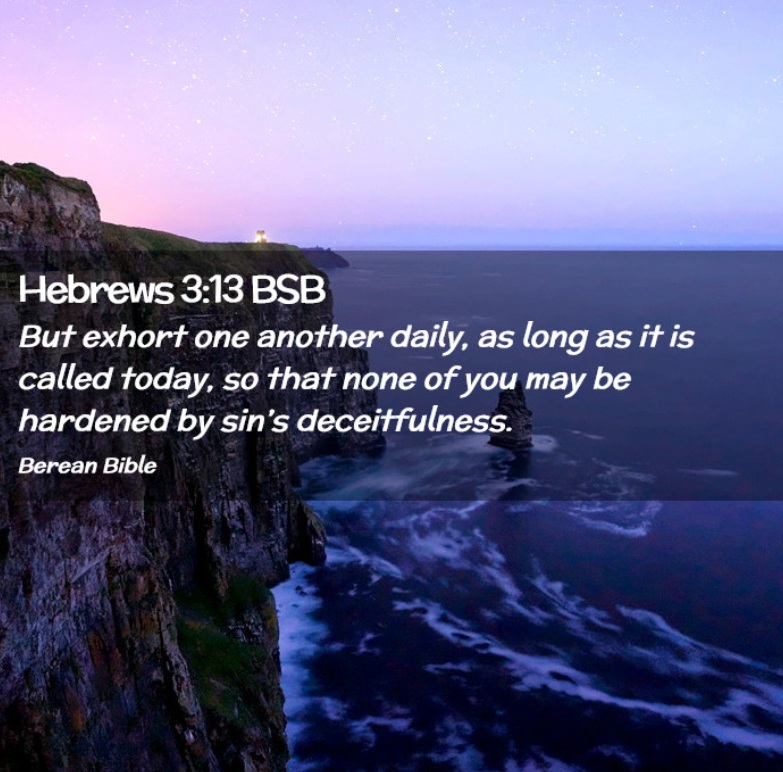
Sin is deceitful, so says Hebrews 3:13. Let’s examine some of the different ways in which sin can deceive us.
Sin can seem so right, even though it’s always wrong.
King Saul perhaps thought it was right to spare King Agag and the best of the flocks (1 Samuel 15), but it was very wrong. Paul thought he was right when he persecuted Christians (Acts 23:1; 26:9), but he was dead wrong. “There is a way which seems right to a man, but its end is the way of death” (Proverbs 14:12).
Sin promises freedom, but what it really brings is slavery.
If you don’t believe it, ask the man who keeps carrying on an affair, even though it’s destroying him, his family, and his partner’s family. He has become a slave to his passions. Or, ask the man who has sacrificed everything else in order to get rich. Looking for financial freedom, what he got instead were more worries than he ever dreamed of. “His own iniquities entrap the wicked man, and he is caught in the cords of his sin” (Proverbs 5:22).
Sin can seem very attractive, but it is actually very ugly.
With sin, what you see is NOT what you get. The fruit of the tree looked very attractive to Eve (Genesis 3:6), but she didn’t stop to think of the ugly consequences (Genesis 2:17). A festering, oozing sore was how God described Judah’s sins (Isaiah 1:5-6). When the apostle Peter wrote about saints who returned to sin, he described it as a dog returning to its vomit and a sow to her wallowing in the mud (2 Peter 2:18-22). The advertising industry paints one picture of sin; God paints an entirely different one.
Sin appears to be satisfying and fulfilling, but it ends up being very disappointing.
Without a doubt, sin brings a certain kind of pleasure. But here’s the catch—it doesn’t last very long. It was said of Moses that he chose “rather to suffer affliction with the people of God than to enjoy the passing pleasures of sin” (Hebrews 11:25). “And the world is passing away, and the lust of it, but he who does the will of God abides forever” (1 John 2:17).
Sin can seem insignificant, when actually it is very serious.
Adam and Eve—all they did was eat a little fruit (Genesis 3). Lot’s wife—she turned around and looked at a burning city, what’s so bad about that? Uzzah—well, he was just trying to keep the ark from falling (2 Samuel 6:1-11). We try to classify our own sins as minor, but that’s not the way God looks at them. Let’s be sure we don’t trivialize ANY sin.
Sin appears to bring life, but what it really brings is death.
What the devil says: “If you really want to live, you should have an affair, get drunk, go to the casino, etc.” What he really means: “If you want to die, you should…” Romans 6:23 is hard to misunderstand: “The wages of sin is death.”
— via the Weekly Bulletin of the Prattmont church of Christ, November 17, 2024
——————–

-2-
At the Crossroads
Doy Moyer
Scripture warns against those who “walk as enemies of the cross of Christ.” Paul writes, “Their end is destruction, their god is their belly, and they glory in their shame, with minds set on earthly things” (Phil 3:18-19). Elsewhere Paul writes that those who cause divisions “do not serve our Lord Christ, but their own appetites, and by smooth talk and flattery they deceive the hearts of the naive” (Rom 16:18). There can be specific applications of this (e.g., Judaizers, perhaps those greedy for food, or immorality), but the concept is still that there were those who were allowing their own desires to take precedence over the will of God. The only thing that mattered to them was their desires, so they gloried in their shame. Sadly, there can be those who give the appearance of wisdom in what they say and do, but they are promoting a “self-made religion” that has “no value in stopping the indulgence of the flesh” because, in reality, they are “not holding fast to the Head,” Jesus Christ (Col 2:16-23). They are enemies of the cross.
Contrasting this selfish spirit of fulfilling their desires and having minds set on earthly things, Paul speaks of dying to the elementary principles of the world and recognizing heavenly citizenship (Col 2:20; Phil 3:19-20). The enemies of the cross set their minds on this world to serve self. Citizens of heaven set their minds on things above because “you have died, and your life is hidden with Christ in God.” Then, “When Christ who is your life appears, then you also will appear with him in glory.” Therefore, “Put to death therefore what is earthly in you…” (Col 3:1-5). Do you see where this is going?
The fight that we will always have is a spiritual battle with self, urged on by the devil. We may sometimes mask our selfish desires with a self-made religion that sounds good, but our self-affirmations and selfish ambitions betray us. We demand rights and fight for entitlements. We worship God as is convenient for us. Our personal happiness is paramount, and we use our freedoms to fight for our desires. Are we portraying the picture of those whose god is their belly and setting their minds on earthly things? Or are we showing what it means to die to self and live for Christ?
This concept of dying to self should not surprise us because it runs throughout Scripture. I have often remarked that the most difficult command in Scripture, at least for me, is found in this: “If anyone would come after me, let him deny himself and take up his cross daily and follow me” (Luke 9:23). Self-denial is a prime trait of a child of God, though it comes with a heavy price: self must die! This is not easy.
Think of the ways this theme is stated: “For you have died, and your life is hidden with Christ in God” (Col 3:3). “How can we who died to sin still live in it?” (Rom 6:2). “He died for all, that those who live might no longer live for themselves but for him who for their sake died and was raised” (2 Cor 5:15). “I have been crucified with Christ. It is no longer I who live, but Christ who lives in me. And the life I now live in the flesh I live by faith in the Son of God, who loved me and gave himself for me” (Gal 2:20). “And those who belong to Christ Jesus have crucified the flesh with its passions and desires” (Gal 5:24). “But far be it from me to boast except in the cross of our Lord Jesus Christ, by which the world has been crucified to me, and I to the world” (Gal 6:14). “We know that our old self was crucified with Him…” (Rom 6:6). Many more passages can be cited.
Self-denial is not a passing concept in Scripture. It is at the crossroads of our service to the Lord, the decision point where we demonstrate how serious we are about our faith. To make self more important than the Lord is to become an enemy of the cross. To set our minds on earthly things is to run contrary to our heavenly citizenship. “For those who live according to the flesh set their minds on the things of the flesh, but those who live according to the Spirit set their minds on the things of the Spirit. For to set the mind on the flesh is death, but to set the mind on the Spirit is life and peace. For the mind that is set on the flesh is hostile to God, for it does not submit to God’s law; indeed, it cannot. Those who are in the flesh cannot please God” (Rom 8:5-8).
This will always be the critical fight. Will we deny self to take up the cross and follow Jesus? How we answer this will define the rest of our lives.
— Via Bulletin Articles from the Vestavia church of Christ, March 30, 2025
——————–
The Steps That Lead to Eternal Salvation
1) Hear the gospel — for that is how faith comes (Rom. 10:17; John 20:30-31).
2) Believe in the deity of Jesus Christ, the Son of God (John 8:24; John 3:18).
3) Repent of sins. For every accountable person has sinned (Romans 3:23; Romans 3:10), which causes one to be spiritually dead (Ephesians 2:1) and separated from God (Isaiah 59:1-2; Romans 6:23). Therefore, repentance of sin is necessary (Luke 13:5; Acts 17:30). For whether the sin seems great or small, there will still be the same penalty for either (Matt. 12:36-37; 2 Cor. 5:10) — and even for a lie (Rev. 21:8).
4) Confess faith in Christ (Rom. 10:9-10; Acts 8:36-38).
5) Be baptized in water for the remission of sins (Mark 16:16; Acts 2:38; 22:16; 1 Pet. 3:21). This is the final step that puts one into Christ (Gal. 3:26-27). For from that baptism, one is then raised as a new creature (2 Cor. 5:17), having all sins forgiven and beginning a new life as a Christian (Rom. 6:3-4). For the one being baptized does so “through faith in the working of God” (Col. 2:12). In other words, believing that God will keep His word and forgive after one submits to these necessary steps. And now as a Christian, we then need to…
6) Continue in the faith by living for the Lord; for, if not, salvation can be lost (Matt. 24:13; Heb. 10:36-39; Rev. 2:10; 2 Pet. 2:20-22).
——————–
Tebeau Street
CHURCH OF CHRIST
1402 Tebeau Street, Waycross, GA 31501
Sunday: 9 a.m. Bible Classes (except for last of the month Song Service)
and 10 a.m. Worship Service
Wednesday: 7 p.m. Bible Classes
evangelist/editor: Tom Edwards (912) 281-9917
Tom@ThomasTEdwards.com
https://thomastedwards.com/go/all.htm (This is a link to the older version of the Gospel Observer website, but with bulletins going back to March 4, 1990.)