Month: May 2026

The Gospel Observer

“Go therefore and make disciples of all the nations…teaching them to observe all that I commanded you; and lo, I am with you always, even to the end of the age” (Matthew 28:19-20, NASB).
——————–

Contents:

1) Consider Your End (Brian A. Yeager)
2) Sword Tips #148 (Joe R. Price)

——————–

-1- 

Consider Your End

Brian A. Yeager

Prior to obeying the Gospel, I found myself considering what would happen if I were to die. When those questions arose in my mind I often dismissed them. I would refocus my mind so that I was not thinking about death, God, and eternal life/damnation. While I was completely ignorant of the Scriptures, I knew within that I was not in a good spiritual condition (though I would not have used such terminology then).

After I obeyed the Gospel, there was a period of time wherein I fell away. I was still sitting in the pew, vainly singing songs, giving, etc. During this time of apostasy, I quickly dismissed any thinking about the condition of my soul. I blamed others for my spiritual decline. Now, knowing about the consequences of sin, I simply focused harder on everything else so that I did not have to be aware of my end. In fact, I knew I was lost and I knew the consequences. I just ignored those facts.

In times prior to obeying the Gospel and in apostasy afterward, I ignored the condition of my soul during the daytime. It was when I was resting and not busy, normally at night, that I found my mind going toward my spiritual condition. I cannot imagine that I was much different than many people are right now. It is easy to focus on other things during busy days, but when you’re in bed it’s much easier to think about whether or not you will awaken in this world or in Hades. When you’re laying up at night and your mind begins racing about final things (cf. Psalms 6:3-7), don’t ignore those doubts and fears. Learn to think about these things more often than just some nights in bed. We need to spend time considering what’ll happen at the end of our lives.

God Wants Us To Consider Our End

 As Christians we live this life looking forward to the end and our ultimate salvation (1 Peter 1:3-9). Consider the following Scriptures, though the contexts vary, about how we should consider the end of our lives: “For they are a nation void of counsel, neither is there any understanding in them. O that they were wise, that they understood this, that they would consider their latter end… So teach us to number our days, that we may apply our hearts unto wisdom. . . The prophets prophesy falsely, and the priests bear rule by their means; and my people love to have it so: and what will ye do in the end thereof. . . And he spake a parable unto them, saying, The ground of a certain rich man brought forth plentifully: And he thought within himself, saying, What shall I do, because I have no room where to bestow my fruits? And he said, This will I do: I will pull down my barns, and build greater; and there will I bestow all my fruits and my goods. And I will say to my soul, Soul, thou hast much goods laid up for many years; take thine ease, eat, drink, and be merry. But God said unto him, Thou fool, this night thy soul shall be required of thee: then whose shall those things be, which thou hast provided? So is he that layeth up treasure for himself, and is not rich toward God” (Deuteronomy 32:28-29, Psalms 90:12, Jeremiah 5:31, Luke 12:16-21). In thinking of our end, we want to find hope rather than dread.

Finding Hope In Death

We should find comfort when we think of the end of our days in this life. Notice these Scriptures: “The wicked is driven away in his wickedness: but the righteous hath hope in his death. . . Then Paul answered, What mean ye to weep and to break mine heart? for I am ready not to be bound only, but also to die at Jerusalem for the name of the Lord Jesus. . . For to me to live is Christ, and to die is gain. But if I live in the flesh, this is the fruit of my labour: yet what I shall choose I wot not. For I am in a strait betwixt two, having a desire to depart, and to be with Christ; which is far better: Nevertheless to abide in the flesh is more needful for you. . . For I am now ready to be offered, and the time of my departure is at hand. I have fought a good fight, I have finished my course, I have kept the faith: Henceforth there is laid up for me a crown of righteousness, which the Lord, the righteous judge, shall give me at that day: and not to me only, but unto all them also that love his appearing”(Proverbs 14:32, Acts 21:13, Philippians 1:21-24, and 2 Timothy 4:6-8).

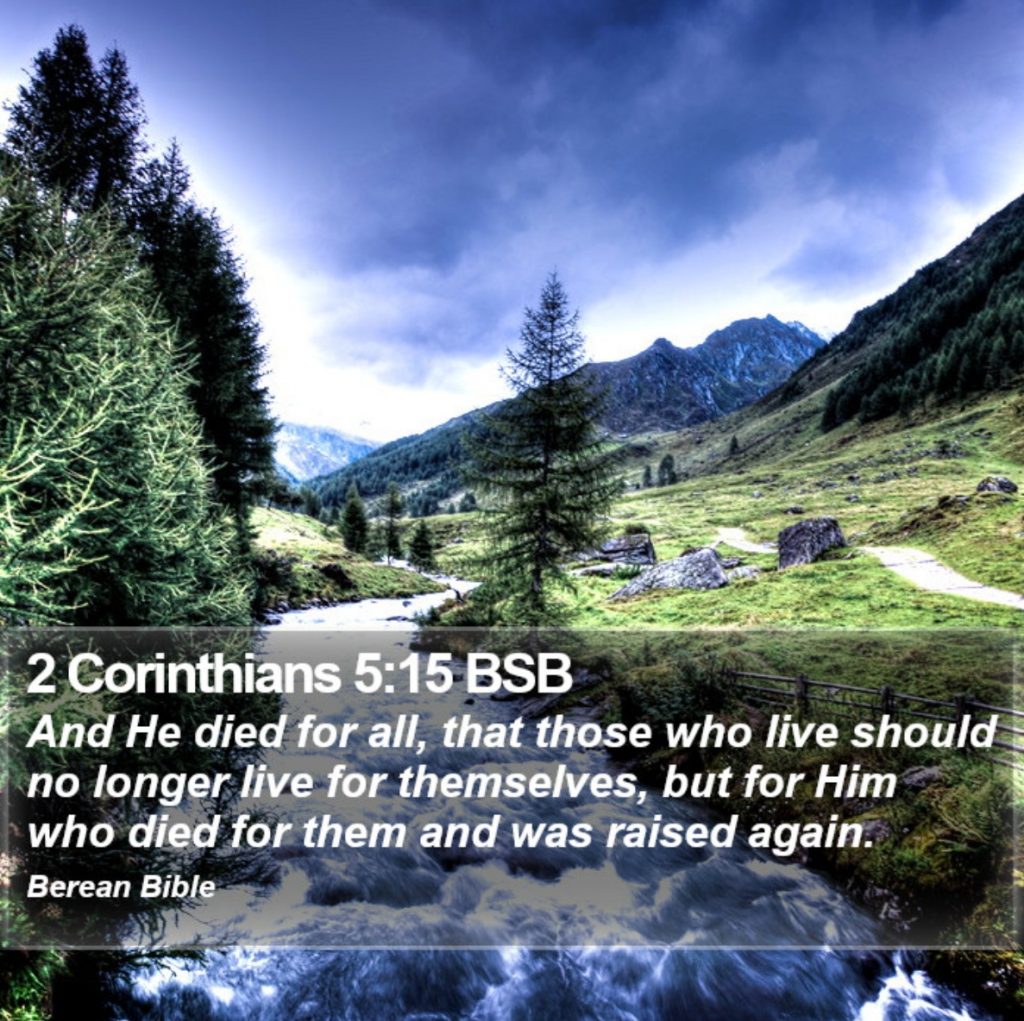
Having spent many years fearing death, I now find great comfort when I consider my end. I certainly do not miss those nights of fear. Now, the fears and sorrows I have are for the souls of others (Romans 9:1-3). To get to that point I had [have] to live a life of faithfulness to be prepared for my end.

Living The Right Life Now So That Your End Will Be Eternal Life

In a parable about ten virgins, there were five prepared to meet the Lord and five who were unprepared. The five unprepared virgins did not receive more time to get ready, but were shut out of life with the Lord. The lesson of that parable is watching and being prepared for the coming of the Lord (Matthew 25:1-13). Whether the Lord comes first or if we die, we’re expected to always be doing the will of God and thus being prepared for our end (Matthew 24:42-46).
 
Noah is a good example of preparation. Noah knew the world was going to be flooded (Genesis 6:9-17). Noah therefore prepared for the day wherein God flooded the earth (Hebrews 11:7). We know the world is going to end (1 John 2:17). Therefore, we need to spend our limited time on this earth preparing for our end (2 Peter 3:9-14). If the world does not end in our time, we still have to prepare for the day wherein each of us will die (Psalms 89:48, Ecclesiastes 12:7, and Hebrews 9:27). Whether it is the Day of Judgment or if we die first, the only way to be prepared for a reward at the end is to live faithfully now (Matthew 7:21-23, John 4:36, Romans 6:22, and Revelation 2:10).

Conclusion

Our lives are merely vapors, which appear for a short time and then vanish away (Psalms 78:39 and James 4:13-15). In considering that life is brief, we need to spend our time here on earth being productive (Ecclesiastes 9:10). Don’t waste time ignoring your soul. Allow fear to move you to work toward a good end for your soul (Philippians 2:12). In closing, consider these two Scriptures: “Mark the perfect man, and behold the upright: for the end of that man is peace. But the transgressors shall be destroyed together: the end of the wicked shall be cut off(Psalms 37:37-38)

— Via Viewpoint from the Valley Grove church of Christ, January 16, 2022

——————–

-2-

“And take…the sword of the Spirit, which is the word of God” (Eph. 6:17).

Sword Tips #148

Joe R. Price

Remember now your Creator in the days of your youth, before the difficult days come, and the years draw near when you say, “I have no pleasure in them.” (Ecclesiastes 12:1)


King Solomon makes a compelling reason to remember God when you are young. As you get older, the way you think and the things you do can make it harder to turn to God in fullness of faith. As youth gives way to age you can convince yourself that you cannot change who you are and what you do. Or, you may believe you do not need to change. The longer you live without God the easier it is to keep doing so. Your heart becomes hard against God and his truth as sin becomes entrenched in your thinking and conduct. Take pleasure in God early and often; rejoice in his blessings and live in his truth. By doing so you can face getting older with faith instead of doubt.

——————–

The Steps That Lead to Eternal Salvation

1) Hear the gospel — for that is how faith comes (Rom. 10:17; John 20:30-31).
 
2) Believe
 in the deity of Jesus Christ, the Son of God (John 8:24; John 3:18).

3) Repent 
of sins.  For every accountable person has sinned (Romans 3:23; Romans 3:10), which causes one to be spiritually dead (Ephesians 2:1) and separated from God (Isaiah 59:1-2; Romans 6:23). Therefore, repentance of sin is necessary (Luke 13:5; Acts 17:30).  For whether the sin seems great or small, there will still be the same penalty for either (Matt. 12:36-37; 2 Cor. 5:10) — and even for a lie (Rev. 21:8).

4) Confess faith 
in Christ (Rom. 10:9-10; Acts 8:36-38).

5) Be baptized 
in water for the remission of sins (Mark 16:16; Acts 2:38; 22:16; 1 Pet. 3:21).  This is the final step that puts one into Christ (Gal. 3:26-27).  For from that baptism, one is then raised as a new creature (2 Cor. 5:17), having all sins forgiven and beginning a new life as a Christian (Rom. 6:3-4). For the one being baptized does so “through faith in the working of God” (Col. 2:12). In other words, believing that God will keep His word and forgive after one submits to these necessary steps. And now as a Christian, we then need to…

6) Continue in the faith
by living for the Lord; for, if not, salvation can be lost (Matt. 24:13; Heb. 10:36-39; Rev. 2:10; 2 Pet. 2:20-22).
——————–

Tebeau Street
CHURCH OF CHRIST
1402 Tebeau Street, Waycross, GA  31501

Sunday: 9 a.m. Bible Classes (except for last of the month Song Service)
and 10 a.m. Worship Service
Wednesday: 7 p.m. Bible Classes 
 
evangelist/editor: Tom Edwards (912) 281-9917
Tom@ThomasTEdwards.com

https://thomastedwards.com/go/all.htm (This is a link to the older version of the Gospel Observer website, but with bulletins going back to March 4, 1990.)

The Gospel Observer

“Go therefore and make disciples of all the nations…teaching them to observe all that I commanded you; and lo, I am with you always, even to the end of the age” (Matthew 28:19-20, NASB).
——————–

Contents:

1) The New Man’s Anger (Heath Rogers)
2) “The Glory Due To His Name” (R.J. Evans)
3) “Just As I Am” (Frank Himmel)

——————–   

-1-

The New Man’s Anger

Heath Rogers

“‘Be angry, and do not sin’: do not let the sun go down on your wrath, nor give place to the devil” (Eph. 4:26-27).

As Paul describes putting off the old man of sin and putting on the new man, we might expect him to deliver a complete prohibition against anger. This emotion produces words and actions that cause pain and destruction. To our surprise, Paul says we can “be angry.”

The new man “was created according to God, in true righteousness and holiness” (Eph. 4:24). It is impossible for God to lie (v. 25), but He is very capable of displaying anger when things violate His righteousness and holiness. Jesus expressed anger and righteous indignation (Mark 3:5; John 2:14-16). Being made in God’s image (Gen. 1:26-27), we are capable of anger. God allows us to retain this natural emotion, but we are warned to control it.

Anger is dangerous because it is a very strong emotion. All strong emotions are doorways to sin. Cain was angry about God rejecting his offering. “Then the Lord said to Cain, ‘Why are you angry? And why has your countenance fallen? If you do well, will not your countenance be lifted up? And if you do not do well, sin is crouching at the door; and its desire is for you, but you must master it’” (Gen. 4:6-7, NASB). When we find our anger being aroused, a warning should go off in our head – we are getting dangerously close to sin! If we stay in this state very long, it will give the devil the opening he needs to lead us into performing his will. “So then, my beloved brethren, let every man be swift to hear, slow to speak, slow to wrath; for the wrath of man does not produce the righteousness of God” (James 1:19-20).

Our anger must be resolved quickly – “Do not let the sun go down on your wrath.” The setting of the sun marks the end of the day. Unresolved anger must never be left out overnight. It robs us of a peaceful night’s sleep. We spend hours demonizing the objects of our anger, making them sworn enemies deserving of our wrath. Given the opportunity, anger will turn inward and take root in our heart as bitterness, hatred, and resentment. This residual poison leads to malice and vengeance. None of this belongs in the new man.

We can either control our anger, or it will control us. Christ expects His followers to learn to control all their strong emotions. Anyone can become angry. However, learning to be angry at the right thing, for the right reason, at the right time, and in the right way requires serious spiritual growth and self-control. This is part of putting on the new man.

— via Articles from the Knollwood church of Christ, February 2026

——————–   

-2-                          

“The Glory Due To His Name”

R.J. Evans

I guess it must have been at least twenty-five years ago that I purchased two books on THE NAMES OF GOD. In reading through them, I discovered how much we can learn about God as He has revealed Himself by various names in Scripture. In the congregation where I preached and served as one of the elders, we had a younger brother who was an excellent Bible student and teacher. (He is now a gospel preacher for whom the church here at Southside provides financial support.) One day I handed him copies of the two books and suggested that he look them over. I told him I believed he should work up a series of lessons on the subject and teach the class.  He agreed, and did an outstanding job, and it was a wonderful class (it actually became two parts—two quarters, with thirteen lessons each). Since that time, this brother has taught classes on this subject in various churches.

Again, THE NAMES OF GOD in their original language reveal so much. For example, to better understand God’s character and His loving, redemptive purposes for man, we have some of the following names in Scripture: God (Elohim); Lord (Jehovah); God Almighty (El Shaddai); Most High God (El Elyon); Lord (Adonai); Everlasting God (El Olam); Lord of Hosts (Jehovah Sabbaoth). As you can imagine, a deep search into the meaning and significance of each name is awesome.

In this article, we are not considering the names of God, per se. However, there are “names” in verses of the Bible that are so meaningful as to what or who God is to each of us. With this in mind, let us consider important words (or names, in one sense) that mean so much to all who are children of God. Think of it this way—God is our…

RESTORER. “The Lord your God will bring you back from captivity, and have compassion on you, and gather you again from all the nations where the Lord your God has scattered you” (Deut. 30:3).

HOPE. “Now may the God of hope fill you with all joy and peace in believing that you may abound in hope by the power of the Holy Spirit” (Rom. 15:13).

COMFORT. “Blessed be the God and Father of our Lord Jesus Christ, the Father of mercies and God of all comfort” (2 Cor. 1:3).

HELPER. “So that we may say: The Lord is my helper; I will not fear. What can man do to me?” (Heb. 13:6).

PROVIDER. “And Abraham called the name of the place, The-Lord-Will-Provide [YHWH Jireh]; as it is said to this day ‘In the Mount of the Lord it shall be provided’” (Gen. 22:14).

REFUGE. “The Lord also will be a refuge for the oppressed, a refuge in times of trouble” (Psa. 9:9).

HIDING PLACE. “You are my hiding place; You shall preserve me from trouble; You shall surround me with songs of deliverance” (Psa. 32:7).

PEACE. “Peace I leave with you. My peace I give to you; not as the world gives do I give to you. Let not your heart be troubled, neither let it be afraid” (Jn. 14:27).

STRENGTH. “The Lord is my strength and my shield; My heart trusted in Him and I am helped; Therefore my heart greatly rejoices; And with song I will praise Him” (Psa. 28:7).

LOVE. “He who does not love does not know God, for God is love” (1 Jn. 4:8).

FORGIVER. “Who forgives all your iniquities; Who heals all your diseases” (Psa. 103:3).

With this short list of verses of Scripture, we receive a better understanding and get a glimpse of the glory, love, majesty, and power of God. “Give unto the Lord the glory due to His name; Worship the Lord in the beauty of holiness” (Psa. 29:2).

— Via bulletin article for the Southside church of Christ in Gonzales, Louisiana, August 27, 2019

——————–


-3-

“Just As I Am”

Frank Himmel

The song Just As I Am is a commonly used invitation song. The idea in the song is that we cannot make ourselves right with God on our own; apart from Jesus’ blood we have no hope. That is precisely the New Testament picture (Eph. 2:8-9; Titus 3:5; etc.).

I fear, however, that some folks have an erroneous idea about Jesus saving us “just as we are.” They seem to think that He saves us without any change in our conduct. That is opposite to the New Testament picture.

Jesus’ charge to the apostles was “that repentance for forgiveness of sins should be proclaimed in His name to all the nations” (Luke 24:47). Forgiveness is extended to those willing to abandon sinful conduct, not to those who insist on continuing in it.

Paul wrote to the Corinthian Christians,“Do not be deceived; neither fornicators, nor idolaters, nor adulterers, nor effeminate, nor homosexuals, nor thieves, nor the covetous, nor drunkards, nor revilers, nor swindlers, will inherit the kingdom of God. And such were some of you…” (1 Cor. 6:9-10). He did not say such are some of you, but such were. They changed their conduct in connection with being washed, sanctified, and justified (v. 11).

“Just as I am,” if referring to our own helplessness, is a comforting sentiment. But to suggest it means salvation without repentance is to hold out false hope.

— Via The Beacon, August 4, 2024

——————– 

The Steps That Lead to Eternal Salvation

1) Hear the gospel — for that is how faith comes (Rom. 10:17; John 20:30-31).
 
2) Believe 
in the deity of Jesus Christ, the Son of God (John 8:24; John 3:18).

3) Repent 
of sins.  For every accountable person has sinned (Romans 3:23; Romans 3:10), which causes one to be spiritually dead (Ephesians 2:1) and separated from God (Isaiah 59:1-2; Romans 6:23). Therefore, repentance of sin is necessary (Luke 13:5; Acts 17:30).  For whether the sin seems great or small, there will still be the same penalty for either (Matt. 12:36-37; 2 Cor. 5:10) — and even for a lie (Rev. 21:8).

4) Confess faith 
in Christ (Rom. 10:9-10; Acts 8:36-38).

5) Be baptized 
in water for the remission of sins (Mark 16:16; Acts 2:38; 22:16; 1 Pet. 3:21).  This is the final step that puts one into Christ (Gal. 3:26-27).  For from that baptism, one is then raised as a new creature (2 Cor. 5:17), having all sins forgiven and beginning a new life as a Christian (Rom. 6:3-4). For the one being baptized does so “through faith in the working of God” (Col. 2:12). In other words, believing that God will keep His word and forgive after one submits to these necessary steps. And now as a Christian, we then need to…

6) Continue in the faith
by living for the Lord; for, if not, salvation can be lost (Matt. 24:13; Heb. 10:36-39; Rev. 2:10; 2 Pet. 2:20-22).
——————–

Tebeau Street
CHURCH OF CHRIST
1402 Tebeau Street, Waycross, GA  31501

Sunday: 9 a.m. Bible Class  (except for the last Sunday of the month Song Service) and 10 a.m. Worship Service
Wednesday: 7 p.m. Bible Class 
 
evangelist/editor: Tom Edwards (912) 281-9917
Tom@ThomasTEdwards.com

https://thomastedwards.com/go/all.htm (This is a link to the older version of the Gospel Observer website, but with bulletins going back to March 4, 1990.)

The Gospel Observer

“Go therefore and make disciples of all the nations…teaching them to observe all that I commanded you; and lo, I am with you always, even to the end of the age” (Matthew 28:19-20, NASB).
——————–

Contents:

1) “Putting Away Lying” (Heath Rogers)
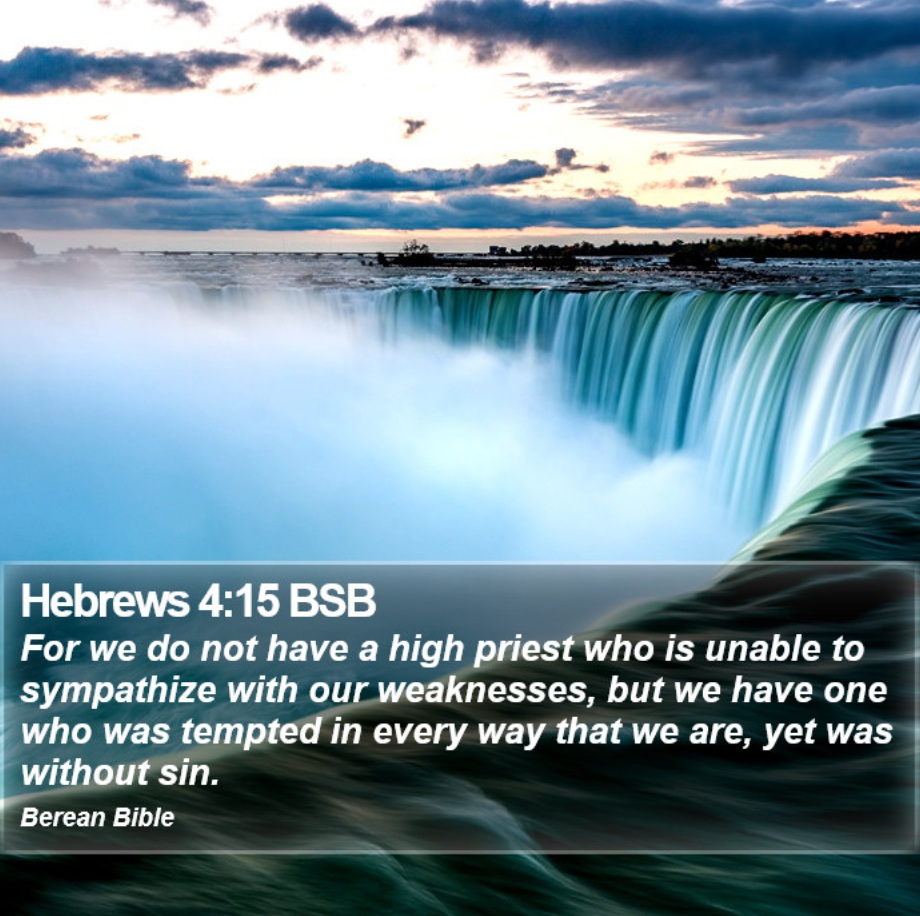
2) Jesus Was Tempted, Too (Bryan Gibson)
3) Sword  Tips #53 (Joe R. Price)

 ——————–   

-1-

“Putting Away Lying”

Heath Rogers

“Therefore, putting away lying, ‘Let each one of you speak truth with his neighbor,’ for we are members of one another” (Eph. 4:25).

After using the put off/put on illustration to describe the change in behavior that is to be produced by learning Christ (vs. 22-24), Paul proceeds to give several specific examples of such changes. He begins with a prohibition against lying.

“Lying” is translated from the Greek word pseudos which refers to all falsehood (rendered such in some modern translations). This involves telling lies, but it also includes the desire to deceive by telling half-truths and withholding facts demanded for a full disclosure of the truth.

The devil is the father of lies (John 8:44). God is truth. He is the source of truth (John 17:17). God is incapable of lying (Titus 1:2; Heb. 6:18). Such an act would violate His holiness. If we are to be identified as God’s children, and if we are to maintain our fellowship with Him, we must put away lying and falsehood.

Some would have us believe there is a distinction between malicious lies and harmless little “white lies.” The Bible makes no such distinction. “…all liars shall have their part in the lake which burns with fire and brimstone, which is the second death” (Rev. 21:8). The world abounds with rationalizations for deceit, making it easy to deal carelessly with the truth. We can fall into the trap of telling lies to protect ourselves or spare the feelings of others. We must put off this practice. All lies are sinful, regardless of who benefits from them.

In the place of telling lies, “let each one of you speak truth with his neighbor.” This appears to be a quotation or allusion to Zechariah 8:16, which called for God’s people to repent and treat others in a just and righteous manner. Our Lord came to bear witness to the truth (John 18:37). Part of following Christ is abiding in the truth, speaking the truth, and dealing truthfully with others.

The motivation given in the text for this change in behavior is the impact deception has on other believers – “we are members of one another.” The “one-another” admonitions are common in Paul’s writings. Working together as members of a local church requires effort on our part. Fellowship in the body of Christ is built and maintained, in large part, on trust. We must deal honestly with God’s word, and with one another. Deception undermines this fellowship, while honesty strengthens and protects it.

— Via Articles from the Knollwood church of Christ, February 2026

——————–  

-2-

Jesus Was Tempted, Too

Bryan Gibson

Immediately after He was baptized by John, “Jesus was led up by the Spirit into the wilderness to be tempted by the devil.” This series of temptations is recorded in Matthew 4:1-11; Mark 1:12-13; and Luke 4:1-13. Let’s see what we can learn from what happened.

The word of God gives us strength against temptation.

In response to each temptation, Jesus used the words, “it is written,” and then quoted a passage from God’s word. Using the word of God as part of His armor, He was able to “stand against the wiles of the devil” (Ephesians 6:11; see also 1 John 2:14; Psalms 119:9-11).

The devil looks for an opportune time to tempt us.

Satan tempted Jesus to turn stones into bread, when He was seemingly most vulnerable—after He had fasted for 40 days and 40 nights. When Satan left Jesus, the text says “he departed from Him until an opportune time” (Luke 4:13). Don’t expect anything different when he goes after us.

Resist the devil, and he will flee.

That promise is made in James 4:7, but illustrated in the temptations of Jesus. Jesus resisted Satan at every turn, and Satan left him—maybe not for good, but he did leave.

Man shall not live by bread alone.

That’s how Jesus responded to the temptation to turn stones into bread. There is much more to life than just what sustains us physically. “Is not life more than food and the body more than clothing?” (Matthew 6:25). “Seek first the kingdom of God and His righteousness” (Matthew 6:33)—that’s what life is really all about. “Man shall not live by bread alone, but by every word that proceeds from the mouth of God” (Matthew 4:4).

Use what God has given for the purpose God intends.

Jesus had the power to turn those stones into bread, but to use that power strictly for his own benefit would be a misuse of it. In principle, we face this same temptation every day—to use what God has given us for a different purpose than He intends. Consider this one example: God has given us our bodies, but not to do with as we please (“the body is not for sexual immorality, but for the Lord”—1 Corinthians 6:13).

Never tempt the Lord, or put Him on trial.

Jesus made this point to the devil, after the devil tried to get Him to throw Himself down off the pinnacle of the temple. God has forever proved his care for us by sending His Son to die on the cross (Romans 8:31-32). We don’t have to do things to see whether or not He cares for us. We don’t have to ask as the Israelites once did, “Is the Lord among us or not?” (Exodus 17:7). We’re the ones on trial here, not God.

No offer from Satan is worth losing our soul over.

All the kingdoms of the world and their glory—that’s what Satan offered Jesus, if Jesus would fall down and worship him. A particularly sly approach, because Jesus would ultimately be given dominion over all these kingdoms, just not by the means Satan proposed. He would first have to go the cross. Whatever Satan may offer, it’s not as valuable as our soul. He may even offer us a legitimate end to get us to use the wrong means. Don’t be talked into doing wrong, no matter what Satan may promise.

— via the Weekly Bulletin of the Prattmont church of Christ, December 8, 2024

 ——————–  

-3-

“And take…the sword of the Spirit, which is the word of God” (Eph. 6:17).

Sword Tips #53

Joe R. Price

“Most assuredly, I say to you, if anyone keeps My word he shall never see death” (John 8:51).

The words of Jesus are unmistakable; The person who “keeps (his) word” will not experience death. Of course, Jesus is speaking of spiritual life and spiritual death.

We all have an appointment with physical death (Heb. 9:27). You must get ready for the death of your body by keeping the word of Jesus.

Genuine faith obeys Jesus.

In this verse, Jesus requires obedience in order to “never see death.” “He who has My commandments and keeps them, it is he who loves Me” (Jno. 14:21).

If you desire spiritual life, then believe the word of Christ and start keeping it today.

——————– 

The Steps That Lead to Eternal Salvation

1) Hear the gospel — for that is how faith comes (Rom. 10:17; John 20:30-31).
 
2) Believe i
n the deity of Jesus Christ, the Son of God (John 8:24; John 3:18).

3) Repent 
of sins.  For every accountable person has sinned (Romans 3:23; Romans 3:10), which causes one to be spiritually dead (Ephesians 2:1) and separated from God (Isaiah 59:1-2; Romans 6:23). Therefore, repentance of sin is necessary (Luke 13:5; Acts 17:30).  For whether the sin seems great or small, there will still be the same penalty for either (Matt. 12:36-37; 2 Cor. 5:10) — and even for a lie (Rev. 21:8).

4) Confess faith 
in Christ (Rom. 10:9-10; Acts 8:36-38).

5) Be baptized
 in water for the remission of sins (Mark 16:16; Acts 2:38; 22:16; 1 Pet. 3:21).  This is the final step that puts one into Christ (Gal. 3:26-27).  For from that baptism, one is then raised as a new creature (2 Cor. 5:17), having all sins forgiven and beginning a new life as a Christian (Rom. 6:3-4). For the one being baptized does so “through faith in the working of God” (Col. 2:12). In other words, believing that God will keep His word and forgive after one submits to these necessary steps. And now as a Christian, we then need to…

6) Continue in the faith
by living for the Lord; for, if not, salvation can be lost (Matt. 24:13; Heb. 10:36-39; Rev. 2:10; 2 Pet. 2:20-22).
——————–

Tebeau Street
CHURCH OF CHRIST
1402 Tebeau Street, Waycross, GA  31501

Sunday: 9 a.m. Bible Class (except for the last Sunday of the month Song Service) and 10 a.m. Worship Service
Wednesday: 7 p.m. Bible Classes 
 
evangelist/editor: Tom Edwards (912) 281-9917
Tom@ThomasTEdwards.com

https://thomastedwards.com/go/all.htm (This is a link to the older version of the Gospel Observer website, but with bulletins going back to March 4, 1990.)
© 2026

Theme by Anders NorenUp ↑