Month: June 2026

The Gospel Observer

“Go therefore and make disciples of all the nations…teaching them to observe all that I commanded you; and lo, I am with you always, even to the end of the age” (Matthew 28:19-20, NASB).
——————–

Contents:

1) Should I Worry About This? (Larry Rouse)
2) Psalm 119:25-32 (Berean Study Bible)

——————–

-1-

Should I Worry About This?

Larry Rouse

Over the years I have carefully noted the circumstances surrounding Christians that fell away from the Lord. Some of these I knew very well, with some even being family members. Most of them started believing and professing things they had ardently opposed in the past. As time passed, some became more aggressive and even denied the plain gospel way of salvation calling it “traditionalism.” These departures caused me great grief and I became determined to help others avoid this terrible “slippery slope.” I often have asked the question: “Why did these departures occur?”

Even though these departures were later characterized by radical doctrinal compromise, I do not know of one individual whose departure came solely from a doctrinal influence. If these individuals had studied and became convinced that these doctrines were true to the scriptures, some of these people would have talked to me with an open Bible. One thing that I found characteristic, but puzzling, about my friends was that they would no longer even talk to me about their change, even though we had good relationships in the past. Again I asked: “What causes a person to act this way?”

The answer that I discovered is the answer the scriptures supply when it describes the “works of the flesh,” which in essence is the arsenal of Satan. All of these people, I strongly believe, lost control of their hearts to issues such as uncontrolled anger, covetousness, unbridled lusts and other temptations. One of the tools Satan used to destroy their faith and allow the flesh to dominate them was the stressful burden of worry.

In the parable of the sower, Jesus describes the unrelenting war that Satan has waged against a living faith, a faith that must be fed by the word of God. The plant that began by the sowing of the powerful seed of God’s word, was made unfruitful by the later choking off of the sustaining word of God. Jesus said: “Now the ones that fell among thorns are those who, when they have heard, go out and are choked with cares, riches, and pleasures of life, and bring no fruit to maturity” (Luke 8:14).

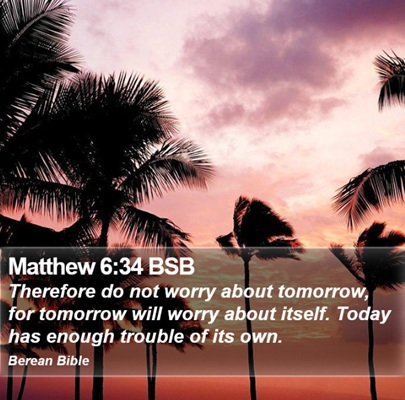
Jesus taught about taking on unnecessary burdens when He plainly warned: “Therefore do not worry about tomorrow, for tomorrow will worry about its own things. Sufficient for the day is its own trouble” (Matthew 6:34). The Greek word that is translated “worry” in this passage has this root meaning: “to care for, be concerned about,” but also can be used in a bad sense where it denotes to “be anxious, be overly concerned about, be worried about” (Louw-Nida Lexicon). Paul plainly showed that a living faith can overcome worry when he wrote: “Do not worry about anything, but in everything by prayer and supplication with thanksgiving let your requests be made known to God” (Philippians 4:6).

How can we know the difference between the legitimate cares that God wishes us to handle and the burdensome cares that we take on ourselves through a lack of faith? The answer is very simple and very comforting. We need to open our hearts completely to Jesus and let Him sift every thought, priority and goal that is in our hearts and then let Him discard most of them, leaving us with the burdens that we can handle. Do you really trust the Lord? If you do, you can certainly live a worry-free life when you trust God like this. “Come to Me, all you who labor and are heavy laden, and I will give you rest. 29Take My yoke upon you and learn from Me, for I am gentle and lowly in heart, and you will find rest for your souls. 30For My yoke is easy and My burden is light” (Matthew 11:28-30).

Consider some of the needless burdens we bear:

We cannot control, or even know all of the consequences of every possible choice that we face each day. Those men who think they can actually control “what may happen” are either blinded by pride or are simply foolish. The heart of faith simply asks “What does the Lord want me to do?” The burden of possible consequences is left to the God who sees and knows the very number of hairs on my head. “Are not two sparrows sold for a copper coin? And not one of them falls to the ground apart from your Father’s will. 30But the very hairs of your head are all numbered. 31Do not fear therefore; you are of more value than many sparrows” (Matthew 10:29-31)

We cannot control what people think or how they might act. Some have become slaves of men with heavy burdens to bear because they fear “what others might think.” What burden does God give us? He simply wants us to live for Him and let His power and His word speak to others through us. The apostle Paul knew that he had no power over the will of others but there was one thing he could do. “Who then is Paul, and who is Apollos, but ministers through whom you believed, as the Lord gave to each one? 6I planted, Apollos watered, but God gave the increase” (1 Corinthians 3:5-6).

What list of unnecessary burdens could you list? Here is a short one to consider:

1. I must not worry about who will be the leader of our country. (Rev 2:26-27)

2. I must not worry about how I will pay the bills. (Heb 13:5-6)

3. I must not worry about my health. (Lk 21:16-18)

4. I must not worry about the well being of my family. (1 Cor 7:32-35)

What happens when a person fails to develop a faith that learns to take the light yoke of Jesus? In time, that faith will break down and that person will seek relief. This was the one characteristic I found in the departure of my friends. Some had become embittered by others and refused to let that burden be the Lord’s. Others had burned themselves out through the pursuit of things that cannot last.

My friends ran to Satan with his false promises and his quick condemnation of the way of God as being “too hard.” The sad truth is that the departure from God’s way leads to a path of real hardship and trouble. Satan wants you to close your eyes and pretend that all is well. Many churches today will encourage you to cast off the commandments of God as “burdensome.”

Which burden will you choose — God’s or Satan’s? Please see clearly the path of a living faith and stand there! “For this is the love of God, that we keep His commandments. And His commandments are not burdensome. 4For whatever is born of God overcomes the world. And this is the victory that has overcome the world—our faith” (I John 5:3-4).

— via The Auburn Beacon
——————–

-2-

Psalm 119:25-32

Daleth

25 My soul cleaves to the dust; revive me according to Your word.

26 I recounted my ways, and You answered me; teach me Your statutes.

27 Make clear to me the way of Your precepts; then I will meditate on Your wonders.

28 My soul melts with sorrow; strengthen me according to Your word.

29 Remove me from the path of deceit and graciously grant me Your law.

30 I have chosen the way of truth; I have set Your ordinances before me.

31 I cling to Your testimonies, O LORD; let me not be put to shame.

32 I run in the path of Your commandments, for You will enlarge my heart.

— Via the Berean Study Bible

——————–

The Steps That Lead to Eternal Salvation

1) Hear the gospel — for that is how faith comes (Rom. 10:17; John 20:30-31).
 
2) Believe 
in the deity of Jesus Christ, the Son of God (John 8:24; John 3:18).

3) Repent 
of sins.  For every accountable person has sinned (Romans 3:23; Romans 3:10), which causes one to be spiritually dead (Ephesians 2:1) and separated from God (Isaiah 59:1-2; Romans 6:23). Therefore, repentance of sin is necessary (Luke 13:5; Acts 17:30).  For whether the sin seems great or small, there will still be the same penalty for either (Matt. 12:36-37; 2 Cor. 5:10) — and even for a lie (Rev. 21:8).

4) Confess faith 
in Christ (Rom. 10:9-10; Acts 8:36-38).

5) Be baptized 
in water for the remission of sins (Mark 16:16; Acts 2:38; 22:16; 1 Pet. 3:21).  This is the final step that puts one into Christ (Gal. 3:26-27).  For from that baptism, one is then raised as a new creature (2 Cor. 5:17), having all sins forgiven and beginning a new life as a Christian (Rom. 6:3-4). For the one being baptized does so “through faith in the working of God” (Col. 2:12). In other words, believing that God will keep His word and forgive after one submits to these necessary steps. And now as a Christian, we then need to…

6) Continue in the faith
by living for the Lord; for, if not, salvation can be lost (Matt. 24:13; Heb. 10:36-39; Rev. 2:10; 2 Pet. 2:20-22).
——————–

Tebeau Street
CHURCH OF CHRIST
1402 Tebeau Street, Waycross, GA  31501

Sunday: 9 a.m. Bible Classes (except for last of the month Song Service)
and 10 a.m. Worship Service
Wednesday: 7 p.m. Bible Classes 
 
evangelist/editor: Tom Edwards (912) 281-9917
Tom@ThomasTEdwards.com

https://thomastedwards.com/go/all.htm (This is a link to the older version of the Gospel Observer website, but with bulletins going back to March 4, 1990.)
The Gospel Observer

“Go therefore and make disciples of all the nations…teaching them to observe all that I commanded you; and lo, I am with you always, even to the end of the age” (Matthew 28:19-20, NASB).
——————–

Contents:

1) A Genuine Interest in Others (R.J. Evans)
2) We Wait by Faith (Irvin Himmel)
3) Psalm 119:17-24 (Berean Study Bible) 

——————–

-1-

A Genuine Interest in Others

R.J. Evans

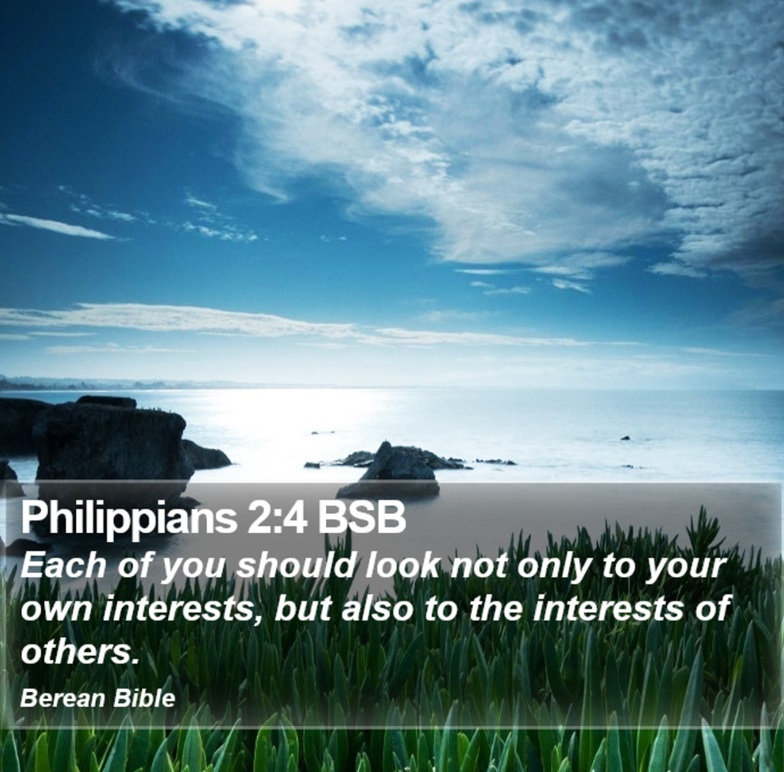
“Let nothing be done through selfish ambition or conceit, but in lowliness of mind let each esteem others better than himself. Let each of you look out not only for his own interests, but also for the interests of others” (Philippians 2:3-4).

It was out of great love and interest in our salvation that God was willing to allow His Son to leave Heaven, live on earth, and ultimately give His life as the redemptive price for the sins of men (Jn. 3:16; Eph. 1:2-12). The overriding purpose of Jesus’ coming to this earth was, not to do His own will or seek His own interests, but rather to do the will of His Father. This purpose was repeated many times in His conversations with others and His prayers to the Father. Hebrews 10:9 says it all: “He said, ‘Behold I have come to do Your will, O God.’” Jesus also taught that “If anyone desires to come after Me, let him deny himself, and take up his cross daily, and follow Me” (Lk. 9:23). The Apostle Paul lived this kind of life, as is stated in Galatians 2:20: “I have been crucified with Christ; it is no longer I who live, but Christ lives in me.” Jesus teaches that God must come first when He said, “But seek first the kingdom of God and His righteousness, and all these things shall be added to you” (Matt. 6:33).

Therefore, we must be willing to overcome ourselves, seek the Lord first, and genuinely be interested in others so that we can find true happiness, contentment, and be truly pleasing to God. The basis of the command in our title is predicated upon what is stated in Philippians 2:5: “Let this mind be in you which was also in Christ Jesus.” Therefore, when we truly have the mind of Christ we can do as the Apostle Paul instructs in Philippians 2:4.

Here are a few suggestions to put into action in our lives:

Resist the urge to think we are so specially important or of more value than others. In other words, work on reducing the urge to depend upon and maintain our own self-pride. To some, everything revolves around the importance of themselves. This causes one to be self-inflated and arrogant. When we develop this attitude toward self, it becomes so difficult, and next to impossible, to be interested in the welfare of others. The Apostle Paul counters this attitude when he told the Corinthians: “And I will gladly spend and be spent for your souls; though the more abundantly I love you, the less I am loved.”

Don’t believe everything we think about ourselves. Don’t become conceited and self-absorbed (go back to our text). The heart can be very deceptive—“The heart is deceitful above all things, And desperately wicked; Who can know it?” (Jer. 17:9). Maintain a good sense of self-esteem, while developing a healthy sense of “ego-skepticism.” We must avoid being proud and thinking we are “above” others! “God resists the proud, But gives grace to the humble” (Jas. 4:6). Being filled with pride sets an individual up for a “fall.” The Apostle Paul warned, “Therefore let him who thinks he stands take heed lest he fall” (1 Cor. 10:12). In the parable of the Good Samaritan, Jesus taught a tremendous lesson on being interested and willing to help others in their needs (Lk. 10:30-37). Let us all realize that we are totally dependent upon God for direction— “O Lord, I know the way of man is not in himself; It is not in man who walks to direct his own steps” (Jer. 10:23). Thus, when God tells us not to be selfish and conceited, with humility esteem others better than ourselves, and be interested in others—He knows that is what is best for us.

We must all work at overcoming ourselves by denying ourselves and developing the heart of a servant—a genuine desire to serve God and looking out for the interests of others.  As Jesus said, “And whoever desires to be first among you, let him be your slave—just as the Son of Man did not come to be served, but to serve, and to give His life a ransom for many” (Matt. 20:27-28).  When we are truly interested in others, we will seek to teach them the gospel if they are lost; we will seek to restore them if they are a fallen Christian; we will assist others in their physical needs; we will rebuke them when necessary; we will show kindness and true love in every way possible; and we will pray for them.

The Apostle Paul stated, “I can do all things through Christ who strengthens me” (Phil. 4:13). This, along with having the mind of Christ, are the keys to obeying the words of our text in having A GENUINE INTEREST IN OTHERS.

— Via the bulletin of the Southside church of Christ, Gonzales, LA, July 16, 2017

——————–

-2-

We Wait by Faith

Irvin Himmel

To the Galatians, Paul wrote, “For we through the Spirit wait for the hope of righteousness by faith” (Gal. 5:5). The main thought in that sentence furnishes the title of this article.

1. We wait by faith when the gospel is preached. After the farmer or gardener sows the seed, he cultivates, waters, and cares for the plant, patiently waiting for the harvest. He has faith that the seed will germinate, the soil will be productive, and the sunshine will cause growth according to God’s natural laws.

In like manner, we do not expect immediate results each time the seed of the kingdom is sown. We show our faith in God’s word, in the divine laws for the growth of the kingdom, and in the promises of God by cultivating and watering, and by patiently waiting for the increase.

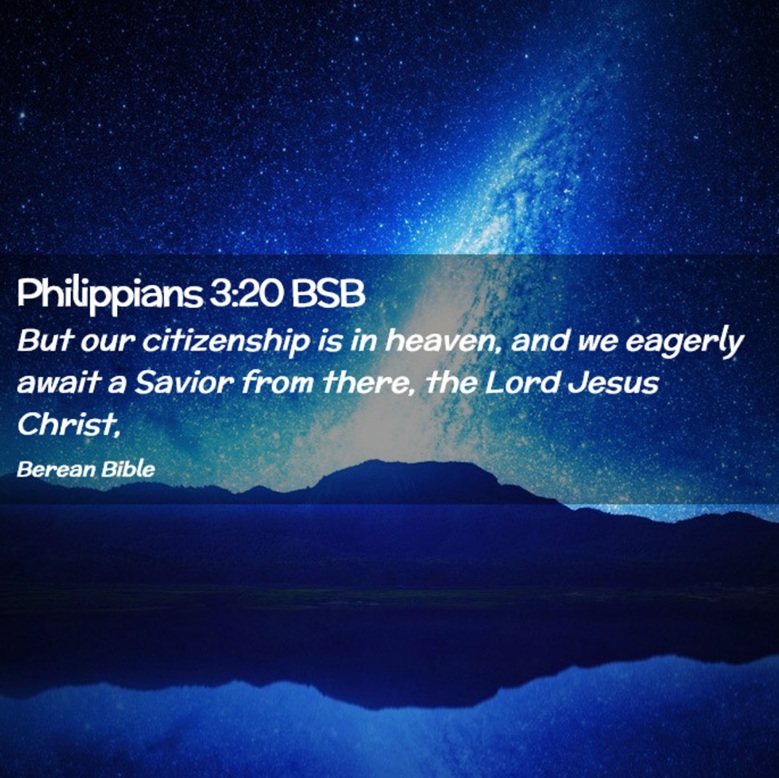
2. We wait by faith for the coming of the Lord. Jesus has promised that He will come again (John 14:1-3; Acts 1:9-11). No one knows of that day or that hour (Matt. 24:36). We do know that “unto them that look for him shall he appear the second time without sin unto salvation” (Heb. 9:28). Our citizenship is in–heaven, “from whence also we look for the Savior, the Lord Jesus Christ” (Phil. 3:20). “Look for” in this passage is the same as “wait” in Gal. 5:5. It conveys the thought of eager expectation as well as patient readiness.

3. We wait by faith for eternal life. We who are Christians live “in hope of eternal life, which God, that cannot lie, promised before the world began” (Tit. 1:2). That which is the grand object of our hope is unseen, for “hope that is seen is not hope… But if we hope for that we see not, then do we with patience wait for it” (Rom. 8:24, 25). This is what Paul is referring to in Gal. 5:5. We, through the Spirit’s revelation by means of the word of God, wait for the hope of righteousness. The Spirit reveals that righteousness or justification is through Jesus Christ, not the works of the law of Moses. Eternal life is the hope offered to all who attain to the righteousness that comes through the exercise of faith in Jesus Christ. We wait (rather than grow discouraged or turn back) for the hope of righteousness by faith.

The life of the Christian is one of the earnest expectation and diligent service in patient waiting; it is a life of fidelity to Christ.

— Via The Auburn Beacon

——————–

-3-

Psalm 119:17-24

Gimel

17 Deal bountifully with Your servant, that I may live and keep Your word.

18 Open my eyes that I may see wondrous things from Your law.

19 I am a stranger on the earth; do not hide Your commandments from me.

20 My soul is consumed with longing for Your judgments at all times.

21 You rebuke the arrogant— the cursed who stray from Your commandments.

22 Remove my scorn and contempt, for I have kept Your testimonies.

23 Though rulers sit and slander me, Your servant meditates on Your statutes.

24 Your testimonies are indeed my delight; they are my counselors.

— Via Berean Study Bible

——————–

The Steps That Lead to Eternal Salvation

1) Hear the gospel — for that is how faith comes (Rom. 10:17; John 20:30-31).
 
2) Believe 
in the deity of Jesus Christ, the Son of God (John 8:24; John 3:18).

3) Repent 
of sins.  For every accountable person has sinned (Romans 3:23; Romans 3:10), which causes one to be spiritually dead (Ephesians 2:1) and separated from God (Isaiah 59:1-2; Romans 6:23). Therefore, repentance of sin is necessary (Luke 13:5; Acts 17:30).  For whether the sin seems great or small, there will still be the same penalty for either (Matt. 12:36-37; 2 Cor. 5:10) — and even for a lie (Rev. 21:8).

4) Confess faith 
in Christ (Rom. 10:9-10; Acts 8:36-38).

5) Be baptized 
in water for the remission of sins (Mark 16:16; Acts 2:38; 22:16; 1 Pet. 3:21).  This is the final step that puts one into Christ (Gal. 3:26-27).  For from that baptism, one is then raised as a new creature (2 Cor. 5:17), having all sins forgiven and beginning a new life as a Christian (Rom. 6:3-4). For the one being baptized does so “through faith in the working of God” (Col. 2:12). In other words, believing that God will keep His word and forgive after one submits to these necessary steps. And now as a Christian, we then need to…

6) Continue in the faith
by living for the Lord; for, if not, salvation can be lost (Matt. 24:13; Heb. 10:36-39; Rev. 2:10; 2 Pet. 2:20-22).
——————–

Tebeau Street
CHURCH OF CHRIST
1402 Tebeau Street, Waycross, GA  31501

Sunday: 9 a.m. Bible Classes (except for last of the month Song Service)
and 10 a.m. Worship Service
Wednesday: 7 p.m. Bible Classes 
 
evangelist/editor: Tom Edwards (912) 281-9917
Tom@ThomasTEdwards.com

https://thomastedwards.com/go/all.htm (This is a link to the older version of the Gospel Observer website, but with bulletins going back to March 4, 1990.)
The Gospel Observer

“Go therefore and make disciples of all the nations…teaching them to observe all that I commanded you; and lo, I am with you always, even to the end of the age” (Matthew 28:19-20, NASB).
——————–

Contents:

1) The Messiah’s Humiliation (Gary Henry)
2) “Put On Love, Which is the Bond of Perfection” (R.J. Evans)
3) Psalm 119:9-16 (Berean Study Bible)
 
——————–

-1-

The Messiah’s Humiliation

Gary Henry

“I can count all my bones — they stare and gloat over me; they divide my garments among them, and for my clothing they cast lots” (Psalm 22: 17,18).

ALL FOUR OF THE GOSPELS IN THE NEW TESTAMENT ALLUDE TO THIS PART OF PSALM 22. In Matthew 27:35; Mark 15:24; Luke 23:34; and John 19:24, there are references to the dividing of Jesus’ garments by the soldiers at His crucifixion. John specifically mentions that this was a fulfillment of prophecy. Yet this is only one of several details in Psalm 22 that describe Jesus’ death. Let’s look at some of the others, and as we do, ask yourself how these could have been fulfilled so vividly and specifically in the death of Jesus if He were not, in fact, the person being pictured in this Psalm.

(1) There is, as we saw yesterday, Jesus’ cry of agony from the cross, “My God, My God, why have you forsaken me?” (v.1), which is quoted in Matthew 27:46 and Mark 15:34. (2) The mocking that was hurled at Jesus, recorded in Matthew 27:39-43, is powerfully depicted in vv.6-8 of Psalm 22. (3) The devastation of the body of a person being crucified is pictured realistically in v.14. (4) The thirst described in v.15 is emphasized in John 19:28. (5) In v.16, there is the saying, “They have pierced my hands and feet.” This wording, while controversial, is supported by the LXX, Syriac, and Vulgate translations and is attested by the earliest manuscript of Psalm 22 discovered among the Dead Sea Scrolls. (6) Finally, there is in v.18, as we saw above, the gambling for the garments of the one being executed. This point is included in all four of the gospels.

In addition to these points, there is the general impression in Psalm 22 — an absolutely profound impression — that one is reading an actual description of what happened when Jesus died. If it was only a vague resemblance, one might argue that the similarity was just a coincidence. But an account with this many specifics, and corresponding so closely to the death of Jesus, can be explained in only one way: David was enabled by God’s Spirit to predict what he could not have known about in any other way.

So we come back to the point we began with yesterday. How can it be that the Messiah, of all people, would die such a death? It is simply that His death was required for our atonement. He reigns in glory today, but the cross had to come before the crown.

“It is suffering and then glory” (Robert Crawford McQuilkin).

— via WordPoints, April 6, 2026

——————–

-2-

“Put On Love, Which is the Bond of Perfection”

R.J. Evans

“Since you have purified your souls in obeying the truth through the Spirit in sincere love of the brethren, love one another fervently with a pure heart…And above all things have fervent love for one another, for ‘love will cover a multitude of sins’” (1 Pet. 2:22; 4:8).

Our text is emphasizing the need for fervent love among Christians, and that need is above anything else in our relationship to each other. These verses from the pen of the inspired Apostle Peter do not stand alone in saying that love is the greatest and most important need among the people of God. Let us give consideration to the following:

In that great chapter on love, 1 Corinthians 13, where love is personified, the chapter ends by mentioning three important abiding things to the Christian. But notice which one is the greatest: “And now abide faith, hope, love, these three; but the greatest of these is love” (1 Cor. 13:13).

After giving a list of important things Christians need to “put on” in their lives, the Apostle Paul then said, “But above all these things put on love, which is the bond of perfection” (Col. 3:14).

When Jesus was asked “Which is the first commandment of all?” Without any hesitation, He said, “The first of all commandments is: ‘Hear O Israel, the Lord our God, the Lord is one. And you shall love the Lord your God with all your heart, with all your soul, with all your mind, and with all your strength.’ This is the first commandment. And the second like it, is this: ‘You shall love your neighbor as yourself.’ There is no other commandment greater than these” (Mk. 12:29-30). After we obey the gospel and become “followers of God as dear children,” surely nothing is as important as to “walk in love, as Christ also has loved us and given Himself for us” (Eph. 5:1-2).

Even if we could do some marvelous things such as speak many languages of men and of angels–if it is not done in love, it would only be making noise such “as sounding brass or clanging cymbal” (1 Cor. 13:1). If we were the greatest preacher ever known and knew all the answers to all the questions, and even had enough faith to remove mountains—if we did not have love in our hearts, we would be “nothing” (1 Cor. 13:2). If we gave all our possessions to feed the poor, and even died doing the Lord’s work–if it was not motivated by love, it profits us “nothing” (1 Cor. 13:3). We should therefore take it seriously when the Scripture says, “Let all that you do be done with love” (1 Cor. 16:14).

We express or manifest our love for the Lord by obeying His commandments. Jesus said, “If you love Me, keep My commandments” (Jn. 14:15). The Apostle John said, “For this is the love of God, that we keep His commandments. And His commandments are not burdensome” (1 Jn. 5:3). We must ever be mindful of the need to have fervent love for one another. For if we do not love our brother, please notice what we are told: “If someone says, ‘I love God,’ and hates his brother, he is a liar; for he who does not love his brother whom he has seen, how can he love God whom he has not seen?” (1 Jn. 4:20).

Our fervent love for one another is so important, especially when we consider the effects it has on how others view us. Jesus said, “A new commandment I give to you, that you love one another as I have loved you, that you also love one another. By this all will know that you are My disciples, if you have love for one another” (Jn. 13:34-35). Question: By the love you are showing, would anyone recognize you as a disciple of Christ?

Love must be the underlying motive and reason for all that we do. It solves so many potential problems. If you are a parent, one of the greatest things you can do for your children is to show your love for God, for your spouse, and for them. If there are problems within a local church, love is the answer–love for God, love for truth, love for one another.

In view of what we have covered in this short article, it is truly understandable why “love will cover a multitude of sins” (1 Pet. 4:8). We close with these words— “Beloved, if God so loved us. we ought to love one another” (1 Jn. 4:11).

— Via the bulletin of the Southside church of Christ, Gonzales, LA, March 10, 2019

——————–

-3-

Psalm 119:9-16

Beth

9  How can a young man keep his way pure? By guarding it according to Your word.

10  With all my heart I have sought You; do not let me stray from Your commandments.

11  I have hidden Your word in my heart that I might not sin against You.

12  Blessed are You, O LORD; teach me Your statutes.

13  With my lips I proclaim all the judgments of Your mouth.

14  I rejoice in the way of Your testimonies as much as in all riches.

15  I will meditate on Your precepts and regard Your ways.

16  I will delight in Your statutes; I will not forget Your word.

— Via Berean Study Bible

——————–

Matthew 4:4

But Jesus answered, “It is written: ‘Man shall not live on bread alone, but on every word that comes from the mouth of God’” (Berean Study Bible).

——————–

The Steps That Lead to Eternal Salvation

1) Hear the gospel — for that is how faith comes (Rom. 10:17; John 20:30-31).
 
2) Believe 
in the deity of Jesus Christ, the Son of God (John 8:24; John 3:18).

3) Repent 
of sins.  For every accountable person has sinned (Romans 3:23; Romans 3:10), which causes one to be spiritually dead (Ephesians 2:1) and separated from God (Isaiah 59:1-2; Romans 6:23). Therefore, repentance of sin is necessary (Luke 13:5; Acts 17:30).  For whether the sin seems great or small, there will still be the same penalty for either (Matt. 12:36-37; 2 Cor. 5:10) — and even for a lie (Rev. 21:8).

4) Confess faith 
in Christ (Rom. 10:9-10; Acts 8:36-38).

5) Be baptized 
in water for the remission of sins (Mark 16:16; Acts 2:38; 22:16; 1 Pet. 3:21).  This is the final step that puts one into Christ (Gal. 3:26-27).  For from that baptism, one is then raised as a new creature (2 Cor. 5:17), having all sins forgiven and beginning a new life as a Christian (Rom. 6:3-4). For the one being baptized does so “through faith in the working of God” (Col. 2:12). In other words, believing that God will keep His word and forgive after one submits to these necessary steps. And now as a Christian, we then need to…

6) Continue in the faith
by living for the Lord; for, if not, salvation can be lost (Matt. 24:13; Heb. 10:36-39; Rev. 2:10; 2 Pet. 2:20-22).

——————–
Tebeau Street
CHURCH OF CHRIST
1402 Tebeau Street, Waycross, GA  31501

Sunday: 9 a.m. Bible Classes (except for last of the month Song Service)
and 10 a.m. Worship Service
Wednesday: 7 p.m. Bible Classes 
 
evangelist/editor: Tom Edwards (912) 281-9917
Tom@ThomasTEdwards.com

https://thomastedwards.com/go/all.htm (This is a link to the older version of the Gospel Observer website, but with bulletins going back to March 4, 1990.)
© 2026

Theme by Anders NorenUp ↑