Month: November 2026

The Gospel Observer

“Go therefore and make disciples of all the nations…teaching them to observe all that I commanded you; and lo, I am with you always, even to the end of the age” (Matthew 28:19-20, NASB).
——————–

Contents:

1) The A.D. 70 Doctrine (Joe R. Price)
2) Psalm 119:145-152 (Berean Bible)
——————–
-1-

The A.D. 70 Doctrine

Joe R. Price

Commonly known as the A.D. 70 doctrine, “Realized Eschatology” (a doctrine of completed last things) is in fact, Realized Error. Also known as “Covenant Eschatology” and Transmillennialism™, one of its adherents explains that “unlike traditional dogma, Transmillennialism™ sees Christ’s millennial reign in its first-century context, from the Old to the New Covenant, bringing about the transformation of the ages. It sees the thrust of the Bible’s speaking about how heaven comes to earth, not primarily about how one gets to heaven.”1 According to this doctrine, “We are now in that world ‘which was to come.’ … instead of being in last days, we are in eternal days world without end (Eph. 3:21). A world that is without end cannot have “last days.”2

The A.D. 70 doctrine affirms the following events happened in A.D. 70 when Jerusalem was destroyed by the Roman army: (1) The promised second coming of Christ, (2) The resurrection was then accomplished, (3) The judgment day occurred, and (4) Every spiritual blessing was perfected and made available to the world.

In vivid contrast to these erroneous conclusions, the Scriptures teach the personal, visible return of Christ has not yet occurred (1 Thess. 4:16). The Scriptures show the bodily resurrection of the dead is not in our past (2 Tim. 2:16-18). The New Testament teaches the judgment of all men has not yet taken place (2 Cor. 5:10). Finally, the New Testament says Christians were already being made complete in Christ prior to A.D. 70 (Col. 2:9-10). The A.D. 70 doctrine is an eschatology of error.

The Final Coming and Jesus did not Occur in A.D. 70

Popularized by Max R. King in his book, The Spirit of Prophecy, the A.D. 70 doctrine says the second (final) coming of Christ occurred in A.D. 70. This interpretation is central to the framework of the doctrine:

The fall of Judaism (and its far reaching consequences) is, therefore, a major subject of the Bible. The greater portion of prophecy found its fulfillment in that event, including also the types and shadows of the law. It was the coming of Christ in glory that closely followed his coming in suffering (1 Peter 1:11), when all things written by the prophets were fulfilled (Luke 21:22; Acts 3:21). It corresponded to the perfection of the saints (1 Cor. 13:10) when they reached adulthood in Christ, receiving their adoption, redemption, and inheritance. The eternal kingdom was possessed (Heb. 12:28) and the new heaven and earth inherited (Matt. 5:5; Rev. 21:1, 7).3


King further explained,

“There is no scriptural basis for extending the second coming of Christ beyond the fall of Judaism” (105). “…the end of the Jewish world was the second coming of Christ” (81, emp. King). “Prophecy found its complete fulfillment in the second coming of Christ, and now may be regarded as closed and consummated” (65).4


Although Jesus Christ will certainly return from heaven, He will not personally return to the earth (1 Thess. 4:17; 2 Pet. 3:10-12). It is true that Jesus was present in the A.D. 70 judgment against Jerusalem, but the visible return of Jesus has not yet occurred (Matt. 24:23-34; Acts 1:9-11; 1 Thess. 4:16; 2 Thess. 1:7-9; 2 Cor. 5:10).

1 Corinthians 15: A Future, Bodily Resurrection

The A.D. 70 doctrine denies a future, bodily resurrection of all humanity. It reaches this false conclusion by reinterpreting the bodily resurrection taught in 1 Corinthians 15. There, the bodily resurrection of Jesus is held out as the “firstfruits” of all who have died (1 Cor. 15:20-22). “At His coming” there will be a bodily resurrection of all who have died since Adam (1 Cor. 15:23, 35, 42-44, 50-55; John 5:28-29).

By redefining terms, the A.D. 70 doctrine interprets 1 Corinthians 15 as depicting the raising of the body of Christianity out of the seedbed of dying Judaism:

Thus, out of the decay of Judaism arose the spiritual body of Christianity that became fully developed or resurrected by the end-time. Hence, this is the primary meaning of Paul’s statement, “It is sown a natural body; it is raised a spiritual body. There is a natural body and there is a spiritual body.”5


The A.D. 70 advocates are not the first to say the resurrection has already happened:

But shun profane and idle babblings, for they will increase to more ungodliness. And their message will spread like cancer. Hymenaeus and Philetus are of this sort, who have strayed concerning the truth, saying that the resurrection is already past; and they overthrow the faith of some (2 Tim. 2:16–18).


Like Hymenaeus and Philetus, the advocates of the A.D. 70 doctrine overthrow people’s faith and must be refused (cf. Rom. 16:17).

2 Peter 3: The Future Judgment Day

The A.D. 70 doctrine insists the promised day of the Lord mentioned in 2 Peter 3 refers to God’s judgment upon Jews in the first century and the fall of Jerusalem in A.D. 70, not to the judgment day for all people at the end of time.

First of all we note that Peter is talking to an audience that includes Jew and Gentile (1 Pet. 4:3). He is not talking to a Jewish audience that is going to be judged by God in Jerusalem in A.D. 70. He is talking to “any” and “all” who should come to repentance (2 Pet. 3:9). Second, Peter says that the day of the Lord will come “as a thief” (2 Pet. 3:10). We will not know when the Lord comes at the end of time. However, when Jesus talked about the destruction of Jerusalem in A.D. 70, He told His disciples that they would in fact know in advance when it was coming (Matt. 24:4-34; see especially vv. 32-33). Third, the heavens and the earth that came out of the flood in the days of Noah are now reserved for fire, not for a Roman army in A.D. 70 (2 Pet. 3:6-7, 10, 12). Peter is not talking about the destruction of Jerusalem in A.D. 70. He is talking about the destruction of this present world.

1 Thessalonians 4:16-18: The Visible Return of Jesus

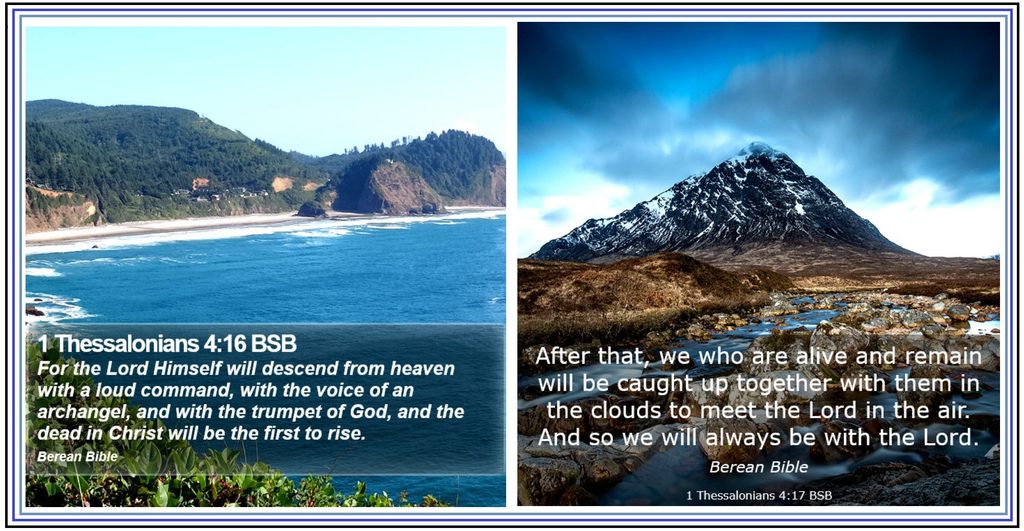
1 Thessalonians 4:16-18 is a snapshot of the events in which Christians will participate when Jesus Christ returns. Jesus will return visibly (“the Lord Himself,” v. 16; Acts 1:11) and audibly (“a shout, with the voice of an archangel, and with the trump of God”). Dead Christians will be raised and living Christians will be “caught up” to meet them “in the air.” In this manner (“and thus”) “we shall always be with the Lord” (v. 17). Jesus came in judgment against Jerusalem in A.D. 70, but He did not come visibly and audibly. That is yet to come.

Jesus will return, but not to the earth. The A.D. 70 doctrine says Jesus has already returned. This error is forever silenced by this angelic message: “Men of Galilee, why do you stand gazing up into heaven? This same Jesus, who was taken up from you into heaven, will so come in like manner as you saw Him go into heaven” (Acts 1:11).

Endnotes

1. Timothy R. King, The Transmillennial® View, Jan 15, 2002.

2. Max R. King, The Spirit of Prophecy, 81, emp. King.

3. Ibid., 239, emp. King.

4. Ibid., 105, 81, 65, emp. King.

5. Ibid., 199-200.

— via Truth Magazine, March 2015, Volume 59, No. 3

https://www.truthmagazine.com/archives/volume59/2015_03_Mar_Truth_Magazine.pdf

——————–

Psalm 119:145-152

Qoph

145I call with all my heart; answer me, O LORD! I will obey Your statutes.

146I call to You; save me, that I may keep Your testimonies.

147I rise before dawn and cry for help; in Your word I have put my hope.

148My eyes anticipate the watches of night, that I may meditate on Your word.

149Hear my voice, O LORD, according to Your loving devotion; give me life according to Your justice.

150Those who follow after wickedness draw near; they are far from Your law.

151You are near, O LORD, and all Your commandments are true.

152Long ago I learned from Your testimonies that You have established them forever.

— Berean Bible

——————–

The Steps That Lead to Eternal Salvation

1) Hear the gospel — for that is how faith comes (Rom. 10:17; John 20:30-31).

2) Believe in the deity of Jesus Christ, the Son of God (John 8:24; John 3:18).

3) Repent of sins. For every accountable person has sinned (Romans 3:23; Romans 3:10), which causes one to be spiritually dead (Ephesians 2:1) and separated from God (Isaiah 59:1-2; Romans 6:23). Therefore, repentance of sin is necessary (Luke 13:5; Acts 17:30). For whether the sin seems great or small, there will still be the same penalty for either (Matt. 12:36-37; 2 Cor. 5:10) — and even for a lie (Rev. 21:8).

4) Confess faith in Christ (Rom. 10:9-10; Acts 8:36-38).

5) Be baptized in water for the remission of sins (Mark 16:16; Acts 2:38; 22:16; 1 Pet. 3:21). This is the final step that puts one into Christ (Gal. 3:26-27). For from that baptism, one is then raised as a new creature (2 Cor. 5:17), having all sins forgiven and beginning a new life as a Christian (Rom. 6:3-4). For the one being baptized does so “through faith in the working of God” (Col. 2:12). In other words, believing that God will keep His word and forgive after one submits to these necessary steps. And now as a Christian, we then need to…

6) Continue in the faith by living for the Lord; for, if not, salvation can be lost (Matt. 24:13; Heb. 10:36-39; Rev. 2:10; 2 Pet. 2:20-22).
——————–

Tebeau Street
CHURCH OF CHRIST
1402 Tebeau Street, Waycross, GA  31501

Sunday: 9 a.m. Bible Classes (except for last of the month Song Service)
and 10 a.m. Worship Service
Wednesday: 5:30 p.m. Bible Classes (Our new time until daylight is longer.)
 
evangelist/editor: Tom Edwards (912) 281-9917
Tom@ThomasTEdwards.com

https://thomastedwards.com/go/all.htm (This is a link to the older version of the Gospel Observer website, but with bulletins going back to March 4, 1990.)
The Gospel Observer

“Go therefore and make disciples of all the nations…teaching them to observe all that I commanded you; and lo, I am with you always, even to the end of the age” (Matthew 28:19-20, NASB).
——————–

Contents:

1) You Can’t Stop the Gospel (Doy Moyer)
2) The Work Goes On (Robert Shouse)
——————–

-1-

You Can’t Stop the Gospel

Doy Moyer

Once the apostles started their work as witnesses of the risen Christ, there was no stopping them. They had been apprehensive. They had been scared and running. Peter had even denied knowing Jesus. But not any longer. All of that would be changed. Once their work began, the Gospel would go out far and wide, Jew and Gentile alike would be saved in great numbers. Even so, opposition would also arise attended with severe consequences. Yet no matter how hard the opposition would try, they just couldn’t stop the spread of the Gospel. They could not stamp out the followers of Christ.

Gamaliel, Paul’s great teacher in the Sanhedrin, gave the council a bit of his wisdom regarding the disciples. Peter and John had already been sternly warned not to preach or teach in the name of Jesus, so what could they do? They could only but speak what they had seen and heard (Acts 4:19-20). It didn’t matter to them what the council thought. They didn’t care anymore what others may have whispered behind their backs. They knew they were preaching the truth about Jesus. This is Truth that has the greatest consequences of anything that can ever be taught. How could they keep silent? They kept on preaching and teaching Jesus as the Christ.

The council continued trying to stop them, and all the apostles were picked up for preaching Jesus. When they again stood before the Sanhedrin, they didn’t apologize for causing disturbances. They didn’t worry about what others around them were thinking. They just taught about Jesus and offered the salvation and forgiveness available through Him. The council was enraged anyway. They had warned the apostles. How dare this band of fishermen disobey the great council! Now the apostles were worthy of death.

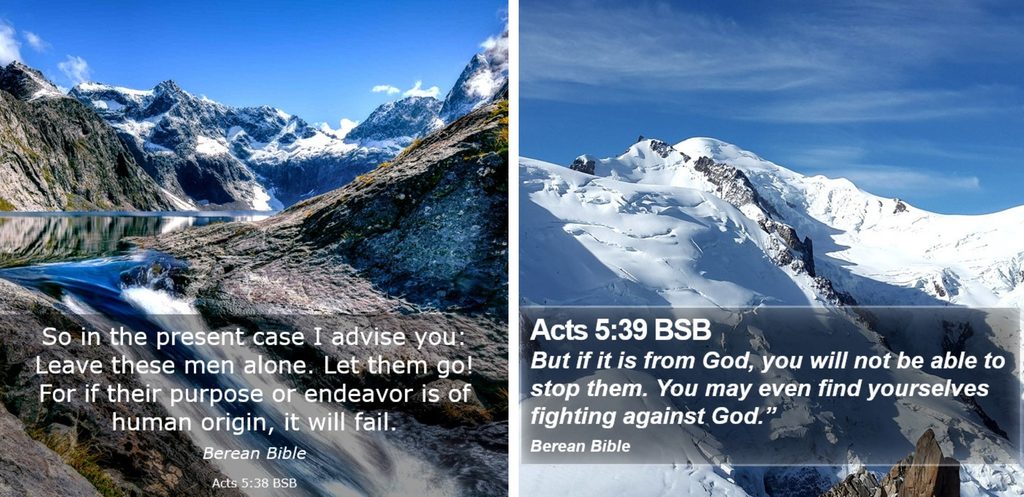
This is when Gamaliel stepped in. Be careful, he told them, with what you do to these men. Others have made fantastic claims and their followers were scattered. Nothing came of them. So just let these men alone, “for if this plan or this undertaking is of man, it will fail; but if it is of God you will not be able to overthrow them. You might even be found opposing God!” (Acts 5:38-39). This is a great theme of the book of Acts. What comes from God cannot be overthrown, and the gospel does come from God.

Gamaliel was on to something vital. He knew he couldn’t stop God’s plans and actions, and he certainly didn’t want to fight against God. One can almost detect an open mind here. Before prejudging these apostles, just let them run their course and see what happens. He likely thought it would just die out.

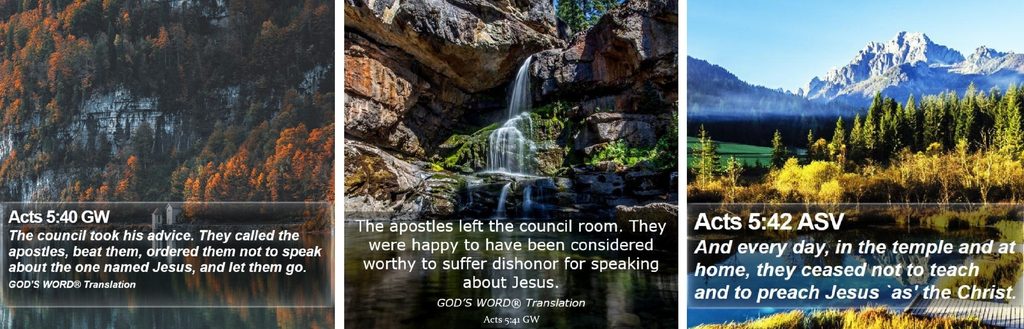
We know what happened! The council listened to Gamaliel and at least didn’t kill the apostles. They did, however, beat them and gave them more warnings. What did the apostles do? They left the council rejoicing that they were considered worthy to suffer shame for the name of Jesus, and “they did not cease teaching and preaching Jesus as the Christ” (Acts 5:41-42). Why should they have stopped? They knew that what they were preaching was truth that could save souls. They knew God was with them. “And we are witnesses to these things, and so is the Holy Spirit, whom God has given to those who obey him” (Acts 5:32).

The Gospel cannot be stopped because it is from God. It was then, and it is now. The evidence of the risen Christ is powerful; so when we place ourselves on the side of Jesus, we can have confidence. What, then, are we afraid of? If it is from God, it cannot be stopped.

“Now who is there to harm you if you are zealous for what is good? But even if you should suffer for righteousness’ sake, you will be blessed. Have no fear of them, nor be troubled, but in your hearts honor Christ the Lord as holy, always being prepared to make a defense to anyone who asks you for a reason for the hope that is in you; yet do it with gentleness and respect” (1 Pet 3:13-15).

The threat of stopping the spread of the Gospel, ironically, is probably greater from those who claim to be disciples than from those who oppose it. We know that if we are diligent in teaching, there will be opposition. Yet opposition to the Gospel does not pay off. Enemies of God cannot stop it. On the other hand, the threat of silencing the Gospel is stronger when those who claim to be disciples keep their own mouths shut. We live in a time that allows for freedom of speech, and sometimes we use our freedom to talk about anything but the Gospel. The opposition doesn’t have to do a thing when we are afraid to speak.

No one can thwart God’s plans. As disciples of Jesus, we need to step up and preach Christ and Him crucified. We must not remain silent in a world of opposition. The example of the apostles is still before us. May we follow their lead and keep right on teaching Jesus.

— Via Bulletin Articles of the Vestavia church of Christ, August 9, 2026

——————–

-2-

The Work Goes On

Roger Shouse

“And all the more believers in the Lord, multitudes of men and women, were constantly added to their number” (Acts 5:14).

There is something interesting that happens in the first few chapters of Acts. It is found in Acts 5 and 6 and 8. Where there are problems and challenges, the church continued to grow. Notice this:

Acts 5 – death of Ananias and Sapphira. This is the first recorded deaths of Christians and they were punished by God for lying. Yet, as our verse today shows, multitudes of men and women were constantly being added. The shame and the death of these two didn’t hinder the growth of the kingdom.

Acts 6 – neglect of some of the widows. A plan and a solution was implemented to take care of this problem. In verse 7, “The word of God kept on spreading; and the number of the disciples continued to increase greatly in Jerusalem and a great many of the priests were becoming obedient to the faith.”

Acts 8 – Saul was arresting men and women who believed and putting them in prison. In verse four, “…those who had be scattered went about preaching the word.”

What a great picture and lesson for all of us. Much too often, when trials, troubles and turmoil arise, everything comes to a screeching halt. Evangelism stops. Encouragement stops. Until the storm passes, nothing gets done. But, that’s not what we see in Acts. In the midst of the storm, these early Christians never forgot their mission, their duty and their roles in the kingdom. The word was spread. More were converted. The kingdom grew.

Here are some things to remember:

First, Satan loves to get us sidetracked and bogged down to the point that we no longer do what we ought to do. Satan doesn’t have to defeat us. He just gets us to stop. We can become obsessed with the trials and troubles. Our every prayer, our every thought, our every sermon, our times together becomes one topic, the trials that we are going through.

Looking at our three examples from Acts, lying, neglect and persecution, yet the work carried on. God is greater than these problems. And, God doesn’t give us a time out to sit on the sidelines until things improve. Onward we must go. We have a job to do and we must do it.

Second, through these troubles in Acts, we see the disciples coming together and being united in what they should do. Neglected widows is enough to splinter and split into a Hebrew church and a Hellenistic church. Instead of that happening, a plan was introduced. Acts 6:5 says, “The statement found approval with the whole congregation.” Unity prevailed. This was not going to be a storm that shipwrecked them nor destroyed the good that was being done. Hearts that loved the Lord and loved each other prevailed.

When sides are taken and we begin firing shots at each other, forgetting who the enemy is, Satan smiles. He wants us to turn against each other. But, arm in arm, stepping forward, the problems are dealt with in a Biblical fashion and the work carries on.

Third, these early disciples understood the great opportunity and privilege placed in their hands of sharing the Gospel message with others. If they didn’t do it, no one else would. There is no outside organization that can be paid to do what God wants us to do. If we do nothing, then the growth stops. Who else is going to do this? And, if we allow a problem or challenge to stop us, there will be more challenges and more problems that follow. Work through these things while still being faithful to the cause and purpose of the Lord.

Vision, unity and purpose – that’s what these early Christians had. And, when sin, neglect and persecution tried to slow them down, it was vision, unity and purpose that saved the day.

Does your congregation have problems? Don’t let that stop you from doing the work that God has designed for you.

— Via the Weekly Bulletin of the Knollwood church of Christ, November 2026

——————–

The Steps That Lead to Eternal Salvation

1) Hear the gospel — for that is how faith comes (Rom. 10:17; John 20:30-31).

2) Believe in the deity of Jesus Christ, the Son of God (John 8:24; John 3:18).

3) Repent
of sins. For every accountable person has sinned (Romans 3:23; Romans 3:10), which causes one to be spiritually dead (Ephesians 2:1) and separated from God (Isaiah 59:1-2; Romans 6:23). Therefore, repentance of sin is necessary (Luke 13:5; Acts 17:30). For whether the sin seems great or small, there will still be the same penalty for either (Matt. 12:36-37; 2 Cor. 5:10) — and even for a lie (Rev. 21:8).

4) Confess faith in Christ (Rom. 10:9-10; Acts 8:36-38).

5) Be baptized in water for the remission of sins (Mark 16:16; Acts 2:38; 22:16; 1 Pet. 3:21). This is the final step that puts one into Christ (Gal. 3:26-27). For from that baptism, one is then raised as a new creature (2 Cor. 5:17), having all sins forgiven and beginning a new life as a Christian (Rom. 6:3-4). For the one being baptized does so “through faith in the working of God” (Col. 2:12). In other words, believing that God will keep His word and forgive after one submits to these necessary steps. And now as a Christian, we then need to…

6) Continue in the faith by living for the Lord; for, if not, salvation can be lost (Matt. 24:13; Heb. 10:36-39; Rev. 2:10; 2 Pet. 2:20-22).
——————–

Tebeau Street
CHURCH OF CHRIST
1402 Tebeau Street, Waycross, GA  31501

Sunday: 9 a.m. Bible Classes (except for last of the month Song Service)
and 10 a.m. Worship Service
Wednesday: 5:30 p.m. Bible Classes (This will be our new time for a while, beginning 11/18/26.)

evangelist/editor: Tom Edwards (912) 281-9917
Tom@ThomasTEdwards.com

https://thomastedwards.com/go/all.htm (This is a link to the older version of the Gospel Observer website, but with bulletins going back to March 4, 1990.)

The Gospel Observer

“Go therefore and make disciples of all the nations…teaching them to observe all that I commanded you; and lo, I am with you always, even to the end of the age” (Matthew 28:19-20, NASB).
——————–

Contents:

1) Assorted Admonitions: All Rivers Are Crooked (Bill Reeves)
2) Psalm 119:137-144 (Berean Bible)

——————–

-1-

Assorted Admonitions: All Rivers Are Crooked

Bill Reeves

Synopsis: Before his recent death, brother Reeves submitted this compelling article, challenging readers to avoid the path of least resistance, which is seemingly peaceful but ultimately perilous.

——————–

It is rare that a river, even at times, is straight. A noticeable feature of rivers is their winding, serpentine course. There is an explanation for their crooked path. Rivers become crooked by following the course of least resistance. If there is an obstacle, the river naturally flows around it. Water never flows uphill! Gravity works on it until it reaches the sea. Our country has a “western divide.” Rivers west of it flow eventually into the Pacific Ocean and those to the east flow into the Gulf of Mexico or the Atlantic Ocean. They all follow the course of least resistance.

Like the river, the majority of people today and in all ages has been those whose conduct is determined by the course of least resistance (laziness, slothfulness, and unnecessary obesity are widespread in our country). What is meant by the phrase, “the course of least resistance”? It signifies the easiest way out, the course that is least antagonistic and perhaps most popular, one that comes with the least effort.

In matters of opinion and expediency, this may be a desirable approach. Attempting to solve the problem that had arisen between his herdsmen and those of Lot, Abram said, “Please let there be no strife between you and me, nor between my herdsmen and your herdsmen, for we are brothers. Is not the whole land before you? Please separate from me; if to the left, then I will go to the right; or if to the right, then I will go to the left” (Gen. 13:8-9). However, in matters of faith and morality, the easy path is rarely (if ever) the right path.

In doing the will of God, we usually are not permitted to follow “the course of least resistance.” Unlike water, which seeks its own level, Christians endeavor to rise to a high level. Our goal is to manifest the mind of Christ (Phil. 2:5-8). Our focus is not on earthly things, but on the things that are above (Col. 3:2).

What moved Noah to remain faithful to God in the midst of a wicked world? Hear the writer of Hebrews: “By faith Noah, being warned by God about things not yet seen, in reverence prepared an ark for the salvation of his household, by which he condemned the world, and became an heir of the righteousness which is according to faith” (Heb. 11:7).

As river waters are moved by gravity, all of us are moved (motivated) by something! What motivates us in life? The NKJV says Noah was moved with godly fear (Heb. 11:7). The NASB says his obedience was rooted in “reverence.” Similarly, we should serve God with “fear and trembling” (Phil. 2:12).

“Noah found favor in the eyes of the Lord” (Gen. 6:8). Why? The answer is found at the end of the chapter: “Thus Noah did; according to all that God had commanded him, so he did” (v. 22). When God gave Noah instructions for constructing the ark, he didn’t argue with the Lord, or propose substitutes, or innovate novelties (Gen 6:14-21; cf. Acts 5:36; he did not engage in “fighting against God”). Instead, Noah obeyed God’s commandments. He did as he was told!

While it is natural for a river to take the course of least resistance, this approach has no place in the life of a Christian. Only the unrighteous are like rivers: their lives follow a downward and crooked course to eternal damnation. Hebrews 11 refers to faithful men and women. After the phrase “by faith,” we see a verb of action, which indicates their obedience to God. Like the heroes of old, let us walk by faith (2 Cor. 5:7), so that, when our days are over, it might also be said of us, “these died in faith” (Heb. 11:13). May we desire a better country, that is, a heavenly one (Heb. 11:16).

Rivers do what they are made to do, which is natural, but man is made in God’s image (Gen. 1:26) and possesses the power of reason. In Romans 12:1, Paul says, “Therefore I urge you, brethren, by the mercies of God, to present your bodies a living and holy sacrifice, acceptable to God, which is your spiritual service of worship.” Consider the Greek word translated “spiritual” in the previous verse. The footnote in the American Standard Version says, “Greek: belonging to the reason.” A Christian uses his reason when he presents his body as a living sacrifice, holy and acceptable to God. Man can reason: “Come now, and let us reason together,” Says the Lord, “Though your sins are as scarlet, They will be as white as snow; Though they are red like crimson, They will be like wool” (Isa. 1:18).

We have the ability to make choices: “If it is disagreeable in your sight to serve the Lord, choose for yourselves today whom you will serve: whether the gods which your fathers served which were beyond the River, or the gods of the Amorites in whose land you are living; but as for me and my house, we will serve the Lord” (Josh. 24:15).

Yes, rivers are crooked, their meandering course is anything but straight. However, man is not a river, governed by the laws of nature. He is made in the image of God, and capable of choosing his course. Accordingly, let us not be sluggards or slothful, corrupt or loathsome, disobedient or lacking in diligence. Rather, may we set our eyes on heaven (Col. 3:2), and constantly look to Jesus (Heb. 12:2). May we know the One we are serving and know where we are going (2 Tim. 1:12).

Let us all wisely choose the course for our earthly lives, recognizing that all end at the judgment court of Christ (Acts 17:30-31). Discipleship is demanding, but the yoke of Christ is easy and light when compared with the burdens associated with following sin and Satan (Acts 17:30-31; Matt. 11:30; 23:4; Luke 11:46; Isa. 46:1). For additional study on “easy,” please consider the following passages (Prov. 3:17; Mic. 6:8; Acts 15:10, 28; Gal. 5:1; 1 John 5:3). On “light,” please compare these verses (John 16:33; 2 Cor. 1:4-5; 4:17; 12:9-10; Phil. 4:13).

Author Bio: Bill H. Reeves, born October 24, 1925, was a faithful husband for 67 years, a caring father of 8 children, and a faithful gospel preacher (in English and Spanish) for over 70 years. He passed from this life on April 4, 2019.

— via Truth Magazine, Volume 63, No. 7, July 2019

https://truthmagazine.com/kindle/2019/2019-07-jul/08_Monthly_Theme_Lesson_04.htm

——————–

-2-

Psalm 119:137-144

Tsadhe

137Righteous are You, O LORD, and upright are Your judgments.

138The testimonies You have laid down are righteous and altogether faithful.

139My zeal has consumed me because my foes forget Your words.

140Your promise is completely pure; therefore Your servant loves it.

141I am lowly and despised, but I do not forget Your precepts.

142Your righteousness is everlasting and Your law is true.

143Trouble and distress have found me, but Your commandments are my delight.

144Your testimonies are righteous forever. Give me understanding, that I may live.

— Berea Bible
_____________

The Steps That Lead to Eternal Salvation

1) Hear the gospel — for that is how faith comes (Rom. 10:17; John 20:30-31).

2) Believe
in the deity of Jesus Christ, the Son of God (John 8:24; John 3:18).

3) Repent
of sins. For every accountable person has sinned (Romans 3:23; Romans 3:10), which causes one to be spiritually dead (Ephesians 2:1) and separated from God (Isaiah 59:1-2; Romans 6:23). Therefore, repentance of sin is necessary (Luke 13:5; Acts 17:30).  For whether the sin seems great or small, there will still be the same penalty for either (Matt. 12:36-37; 2 Cor. 5:10) — and even for a lie (Rev. 21:8).

4) Confess faith
in Christ (Rom. 10:9-10; Acts 8:36-38).

5) Be baptized
in water for the remission of sins (Mark 16:16; Acts 2:38; 22:16; 1 Pet. 3:21). This is the final step that puts one into Christ (Gal. 3:26-27). For from that baptism, one is then raised as a new creature (2 Cor. 5:17), having all sins forgiven and beginning a new life as a Christian (Rom. 6:3-4). For the one being baptized does so “through faith in the working of God” (Col. 2:12). In other words, believing that God will keep His word and forgive after one submits to these necessary steps. And now as a Christian, we then need to…

6) Continue in the faith
by living for the Lord; for, if not, salvation can be lost (Matt. 24:13; Heb. 10:36-39; Rev. 2:10; 2 Pet. 2:20-22).
——————–

Tebeau Street
CHURCH OF CHRIST
1402 Tebeau Street, Waycross, GA  31501

Sunday: 9 a.m. Bible Classes (except for last of the month Song Service)
and 10 a.m. Worship Service
Wednesday: 7 p.m. Bible Classes

evangelist/editor: Tom Edwards (912) 281-9917
Tom@ThomasTEdwards.com

https://thomastedwards.com/go/all.htm (This is a link to the older version of the Gospel Observer website, but with bulletins going back to March 4, 1990.)
The Gospel Observer

“Go therefore and make disciples of all the nations…teaching them to observe all that I commanded you; and lo, I am with you always, even to the end of the age” (Matthew 28:19-20, NASB).
——————–

Contents:

1) Meditations Column: Things We Can’t Live Without (Kyle Pope)
2) Psalm 119:129-136 (Berean Bible)

——————–

-1-


Meditations Column:
Things We Can’t Live Without

Kyle Pope

Synopsis: Consider the biblical significance of the preposition “without,” which signifies “in the absence of” (something) or “in circumstances in which the action mentioned (in the context) does not happen.”
——————–

Introduction

What is there in your life that you could not live without? Sometimes we describe things we really love as things we couldn’t live without (e.g., chocolate, a mate, a hobby, our favorite entertainment). When it comes to our physical lives, there are really only a few things that we cannot live without—things like food, water, clothing, and shelter. These are indispensable to life since we cannot dispense with them and survive. What are some spiritual indispensables? Let’s consider seven things the Bible describes in this way.

1. Without the Shedding of Blood There Is No Forgiveness (Heb. 9:19-22).

The blood of animals (like bulls, goats, and lambs) that were used in Old Testament sacrifices had value, but the Hebrew writer makes it clear that their value was limited (Heb. 10:1-4). The Blood of the new covenant is not that of animals but of Christ Himself, our High Priest and Savior (Heb. 9:11-15). Redemption from sin comes through Christ’s blood shed on the cross (Col. 1:13-16). Unlike the limited nature and power of animal sacrifices, Christ’s blood offers redemption and forgiveness because of its source. Jesus is and was “the image of the invisible God.” The blood of God in the flesh can bring Divine forgiveness!

How does one access this blood? Paul taught that one is baptized into Christ’s death (Rom. 6:1-4). When a person is baptized into Christ, he is baptized into Christ’s death, gaining access to this redeeming blood.

What is the benefit of this blood? Christ’s blood cleanses us (1 John 1:5-7). Truly, without blood—His blood, there is no forgiveness of sins. If we are outside of Christ and have never been cleansed by His blood, the stain and filth of sin clings to us to this very moment. Christ’s blood is a spiritual indispensable.

2. Without Faith it Is Impossible to Please God (Heb. 11:1-6).

All who die outside of Christ die in sins (John 8:21-24). Just as the one without the blood of Christ retains his sin, the one who does not believe in the One who is the source of that blood will die in sins. By contrast, the one who truly believes in Christ will receive forgiveness (Acts 10:36-43). The Scriptures were written to produce faith (John 20:30-31). God wants all people to believe in Jesus, the one and only source of forgiveness. Faith is a spiritual indispensable.

3. Without Works, Faith Is Dead (Jas. 2:26).

The kind of faith that pleases God and gains access to the saving blood of Christ is a living, active, and obedient faith. It is not faith alone (Jas. 2:21-24). The world teaches salvation by “faith alone,” but the only place the phrase “faith only” is found in Scripture is James 2:24. It teaches just the opposite. If salvation is by faith only, who would need Christ’s blood? Why would we need His death? James isn’t teaching that our works merit salvation, but he is teaching that the only type of faith that pleases God is one that is obedient! Faith leads to obedience. “He who believes in the Son has everlasting life; and he who does not believe the Son shall not see life, but the wrath of God abides on him” (John 3:36, NKJV). The New American Standard Update renders this verse: “He who believes in the Son has eternal life; but he who does not obey the Son will not see life, but the wrath of God abides on him.”

Faith is dead without obedience (Jas. 2:17). Someone might say: “You’re teaching that baptism is a work that saves us!” It is a work of one with an obedient faith, but how did Paul describe it? He taught that in baptism we rise in faith (Col. 2:11-12). Our obedience and our faith go hand in hand. We can’t have one without the other, but one completes and accomplishes the other. He taught that faith works love (Gal. 5:6). We see this in life. Someone who loves another person demonstrates that love. The one who does not demonstrate love does not really love! Works of obedience are a spiritual indispensable.

4. Without Holiness We Can’t See God (Heb. 12:14).

Thayer defines the Greek word hagiasmos, translated “holiness,” to mean “consecration, purification, the effect of consecration, sanctification of heart and life.” To see God, one must have a pure heart (Matt. 5:8). Holiness involves offering our lives as a living sacrifice (Rom. 12:1-2). In one sense, everything we do as a Christian should offer God a “living sacrifice.” Holiness demands control over our bodies and over our minds (1 Thess. 4:3-7). Holiness is a spiritual indispensable.

5. Without Love We Are Nothing (1 Cor. 13:1-2).

Amid the first-century controversy over circumcision, Paul wrote: “For in Christ Jesus neither circumcision nor uncircumcision avails anything, but faith working through love” (Gal. 5:6). Just as faith must be made complete by works of obedience, faithful obedience must work “through love.” The soul who does not obey does not have saving faith. Jesus teaches if we don’t obey His commandments, we do not love Him (John 14:23-24). John wrote, “This is love, that we walk according to His commandments” (2 John 6). Love is a spiritual indispensable.

6. Without Chastisement We Are Not Sons (Heb. 12:6-8).

Hardships that Christians must face may be thought of as a type of discipline—not in the sense of punishment for wrongdoing, but in the sense of training. Like the corporal punishment and training of children produces good behavior, faithfulness through trial yields the peaceable fruit of righteousness (Heb. 12:9-13). Both the Old and New Testaments teach that chastening and training may be found in what God teaches through His word, in the trials of life, and in the correction imposed by faithful brethren. These things (when received by those guided by God’s word) are God’s ways of teaching and training us as children. Chastisement is a spiritual indispensable.

7. Without Christ We Can Do Nothing (John 15:4-6).

The ungodly may do plenty of good things, but when one stands outside of Christ, their works do not please God. Apart from Christ, we can do nothing that will take away a single sin. Apart from Christ, we can do nothing that will be good enough to make us right with God. Apart from Christ, we are lost and without hope. Christ is the ultimate spiritual indispensable.

— Via Truth Magazine, Volume 66, No. 8, August 2022

https://truthmagazine.com/kindle/2022/2022-08-aug/02_Meditations.htm

——————–

-2-

Psalm 119:129-136

Pe

129Wonderful are Your testimonies; therefore I obey them.

130The unfolding of Your words gives light; it informs the simple.

131I open my mouth and pant, longing for Your commandments.

132Turn to me and show me mercy, as You do to those who love Your name.

133Order my steps in Your word; let no sin rule over me.

134Redeem me from the oppression of man, that I may keep Your precepts.

135Make Your face shine upon Your servant, and teach me Your statutes.

136My eyes shed streams of tears because Your law is not obeyed.

— Berean Bible
_____________

The Steps That Lead to Eternal Salvation

1) Hear the gospel — for that is how faith comes (Rom. 10:17; John 20:30-31).

2) Believe in the deity of Jesus Christ, the Son of God (John 8:24; John 3:18).

3) Repent of sins. For every accountable person has sinned (Romans 3:23; Romans 3:10), which causes one to be spiritually dead (Ephesians 2:1) and separated from God (Isaiah 59:1-2; Romans 6:23). Therefore, repentance of sin is necessary (Luke 13:5; Acts 17:30). For whether the sin seems great or small, there will still be the same penalty for either (Matt. 12:36-37; 2 Cor. 5:10) — and even for a lie (Rev. 21:8).

4) Confess faith in Christ (Rom. 10:9-10; Acts 8:36-38).

5) Be baptized in water for the remission of sins (Mark 16:16; Acts 2:38; 22:16; 1 Pet. 3:21). This is the final step that puts one into Christ (Gal. 3:26-27).  For from that baptism, one is then raised as a new creature (2 Cor. 5:17), having all sins forgiven and beginning a new life as a Christian (Rom. 6:3-4). For the one being baptized does so “through faith in the working of God” (Col. 2:12). In other words, believing that God will keep His word and forgive after one submits to these necessary steps. And now as a Christian, we then need to…

6) Continue in the faith by living for the Lord; for, if not, salvation can be lost (Matt. 24:13; Heb. 10:36-39; Rev. 2:10; 2 Pet. 2:20-22).
——————–

Tebeau Street
CHURCH OF CHRIST
1402 Tebeau Street, Waycross, GA 31501

Sunday: 9 a.m. Bible Classes (except for last of the month Song Service)
and 10 a.m. Worship Service
Wednesday: 7 p.m. Bible Classes

evangelist/editor: Tom Edwards (912) 281-9917
Tom@ThomasTEdwards.com

https://thomastedwards.com/go/all.htm (This is a link to the older version of the Gospel Observer website, but with bulletins going back to March 4, 1990.)

© 2026

Theme by Anders Noren — Up ↑