“Go therefore and make disciples of all the nations…teaching them to observe all that I commanded you; and lo, I am with you always, even to the end of the age” (Matthew 28:19-20, NASB).
——————–
Contents:
1) Beneath the Cross (Matt Hennecke)
2) Seek God When He May Be Found (Psalm 32:6) (Mike Johnson)
3) Psalm 119:113-120 (Berean Standard Bible)
——————–
-1-
Beneath the Cross
Matt Hennecke
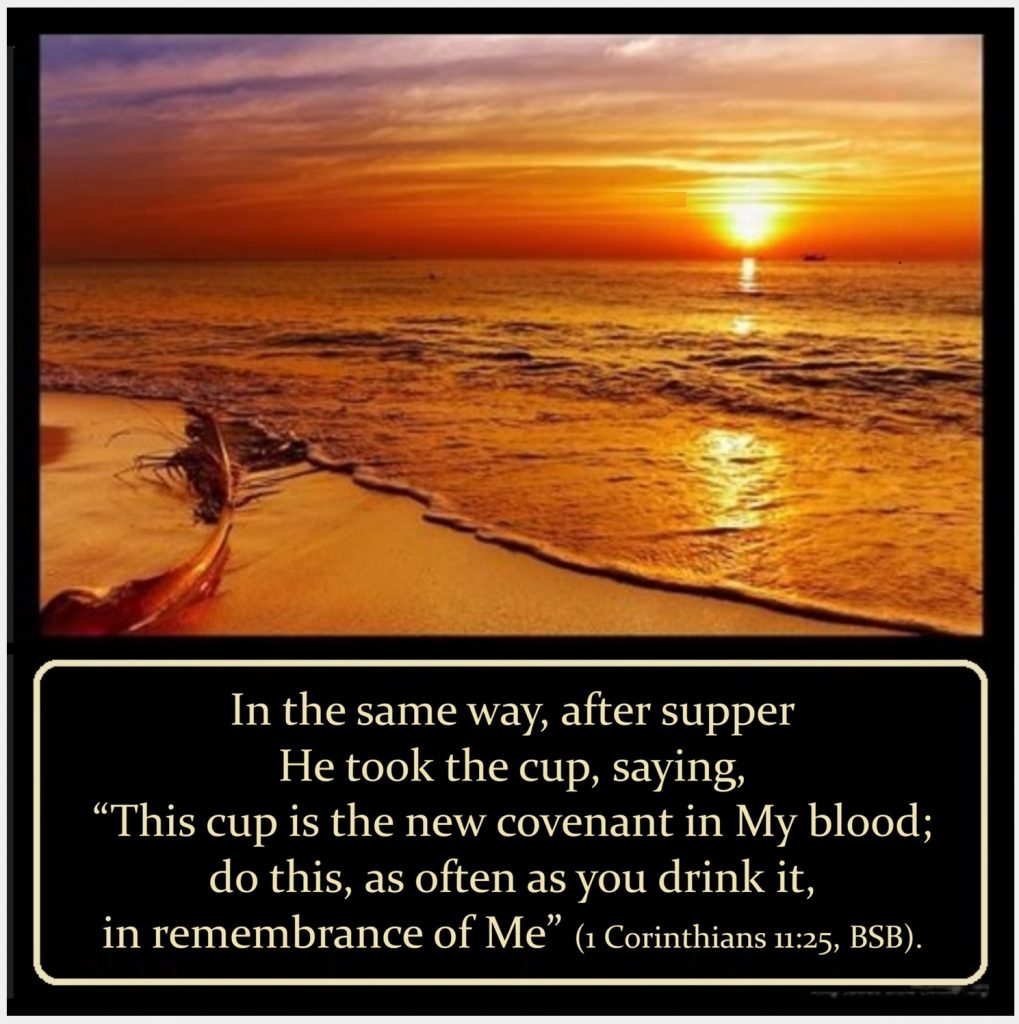
Whenever we gather to partake of the Lord’s Supper, we join in remembering something we didn’t witness—Jesus’s crucifixion. We attempt to somehow “see” what we didn’t see. Is this even possible?
When Jesus instituted the Lord’s Supper, he told his followers to eat in remembrance of him; but I wasn’t at the cross and you weren’t either, so how can we remember? And we’re not the only ones who weren’t there. Except for one, that ragtag group of apostles who had followed Jesus during his three-year ministry weren’t there either.
You know who stood beneath the cross of Jesus when he was crucified? His mother. Why? One word: love. Hers was the undying devotion and amazing love of a mother. Despite the absolute horror she was about to witness, no one—neither the Jewish religious elite nor the Roman government—could have kept her from being at her son’s side when the world was at its darkest. There’s nothing in this life more powerful than a mother’s love. It is only eclipsed by God’s love who sent his son to die on the very cross beneath which Mary stood.
The Bible records several other women were present, but where were all the men? Where were the apostles? They’d run. Matthew 26:56 says simply “…all…left him and fled.” John—the one whom Jesus loved—also stood beneath the cross of Jesus. Apparently, he’d fled with the others; but love stopped his flight and, despite the danger, he returned to be with Jesus. Of the apostles, then, only one—John—saw Jesus crucified. The others had fled for their lives—the very lives Jesus was sent to save. Perhaps later, to their shame, when asked if they had seen the crucifixion of Jesus, they had to reply, “No, I wasn’t there.” When these ambassadors of Christ who preached the gospel throughout the known world joined with fellow Christians in taking the Lord’s Supper, they likely felt pangs of guilt as they sought to remember something they had not seen.
So, again, the question: Can we remember what we’ve not witnessed? Can we “see” what we’ve not seen? Can we stand beneath the cross of Jesus and see him crucified? I think we can. I believe we are standing beneath the cross of Jesus when we assemble to partake of the Lord’s Supper.
How can I say this? Because faith is all about “seeing” what we haven’t seen. Hebrews 1:1 says, “faith is the assurance of things hoped for, the conviction of things not seen.” A bit later in the chapter—in verse 27—the writer describes faith somewhat differently. He says faith is “seeing the unseen.”
Elizabeth Clephane—a young Scottish poetess—wrote the lyrics to a hymn we occasionally sing. Sadly, she died at the young age of 39, long before her work was published. One of her poems put to music is entitled “Beneath the Cross.” Elizabeth believed we could “see the unseen” and she believed—despite not having been there—that we could stand and take a stand—even today—beneath the cross of Jesus.
Consider her beautiful lyrics:
Beneath the cross of Jesus
I fain would take my stand,
The shadow of a mighty Rock
Within a weary land.
A home within the wilderness,
A rest upon the way,
From the burning of the noontide heat,
And the burden of the day.
Upon that cross of Jesus
Mine eyes at times can see
The very dying form of One
Who suffer’d there for me.
And from my smitten heart, with tears,
Two wonders I confess:
The wonders of redeeming love,
And my unworthiness.
I take, O cross, thy shadow
For my abiding place.
I ask no other sunshine than
The sunshine of His face.
Content to let the world go by,
To know no gain nor loss,
My sinful self my only shame,
My glory all the cross.
— Via Think on These Things, July-August-September, 2026, Vol. 57, No. 3
——————–
-2-
Seek God When He May Be Found
(Psalm 32:6)
Mike Johnson
In Psalm 32, David describes what might be called the “blessedness of forgiveness.” In this Psalm, David speaks of the agony of sin and of the joy of receiving forgiveness from God. In the course of doing this (v. 6), he speaks of the need to seek God when He “may be found.” Cannot God always been found by the penitent sinner? In a sense, the answer is “yes,” but something else is involved here. God is not hiding from the sinner, but the sinner may not have the opportunity to find God. Many events in life can happen, which take away opportunities to make ourselves right with God. Consider three circumstances/events, which can occur:
1. Our conscience can become hardened or seared. Hebrews 3:13 speaks of a person being “hardened through the deceitfulness of sin”; Romans 2:5 describes an “impenitent heart”; 1 Timothy 4:2 speaks of those who have “their own conscience seared with a hot iron.” People often want to repent and confess their sins to God because their conscience bothers them. However, as time goes on, and they continue to ignore conscience, it then ceases to bother them and becomes hardened or seared. They have lost their opportunity.
2. We can die at any time (James 4:13-17). We are going to be judged based on that which we have done in our body (2 Cor. 5:10). After death, it will be too late.
3. Christ can return at any time (Mt. 24:36-44, 2 Pet. 3:10). At a time when we least expected it, time, and our opportunity to repent can end on this earth.
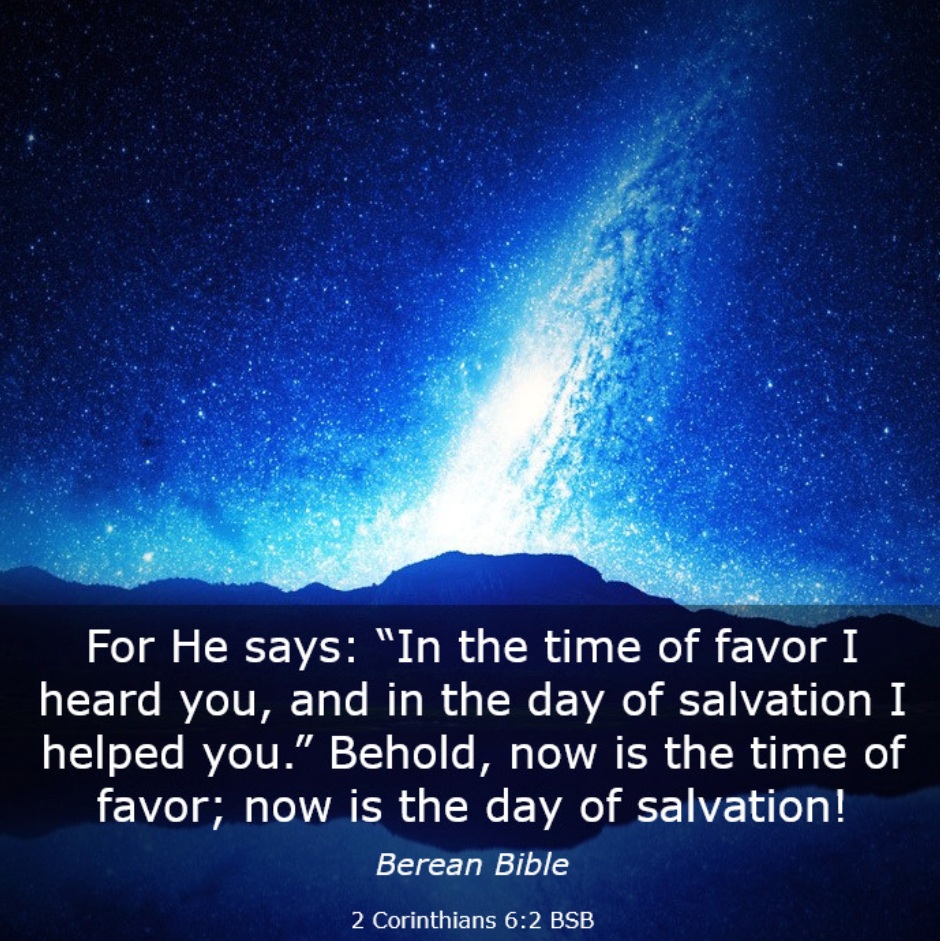
The point is clear. We must take advantage of the time we have now to receive forgiveness lest we lose the opportunity, i.e., we must seek forgiveness “in a time when God can be found.” II Corinthians 6:2 says,“… Behold, now is the accepted time; behold, now is the day of salvation.” All of us should seek God now while we can find Him.
— Via Seeking Things Above, Volume 1, Number 1, April 2020
——————–
-3-
Psalm 119:113-120
Samekh
113The double-minded I despise, but Your law I love.
114You are my hiding place and my shield; I put my hope in Your word.
115Depart from me, you evildoers, that I may obey the commandments of my God.
116Sustain me as You promised, that I may live; let me not be ashamed of my hope.
117Uphold me, and I will be saved, that I may always regard Your statutes.
118You reject all who stray from Your statutes, for their deceitfulness is in vain.
119All the wicked on earth You discard like dross; therefore I love Your testimonies.
120My flesh trembles in awe of You; I stand in fear of Your judgments.
— Berean Standard Bible
_____________
The Steps That Lead to Eternal Salvation
1) Hear the gospel — for that is how faith comes (Rom. 10:17; John 20:30-31).
2) Believe in the deity of Jesus Christ, the Son of God (John 8:24; John 3:18).
3) Repent of sins. For every accountable person has sinned (Romans 3:23; Romans 3:10), which causes one to be spiritually dead (Ephesians 2:1) and separated from God (Isaiah 59:1-2; Romans 6:23). Therefore, repentance of sin is necessary (Luke 13:5; Acts 17:30). For whether the sin seems great or small, there will still be the same penalty for either (Matt. 12:36-37; 2 Cor. 5:10) — and even for a lie (Rev. 21:8).
4) Confess faith in Christ (Rom. 10:9-10; Acts 8:36-38).
5) Be baptized in water for the remission of sins (Mark 16:16; Acts 2:38; 22:16; 1 Pet. 3:21). This is the final step that puts one into Christ (Gal. 3:26-27). For from that baptism, one is then raised as a new creature (2 Cor. 5:17), having all sins forgiven and beginning a new life as a Christian (Rom. 6:3-4). For the one being baptized does so “through faith in the working of God” (Col. 2:12). In other words, believing that God will keep His word and forgive after one submits to these necessary steps. And now as a Christian, we then need to…
6) Continue in the faith by living for the Lord; for, if not, salvation can be lost (Matt. 24:13; Heb. 10:36-39; Rev. 2:10; 2 Pet. 2:20-22).
——————–
Tebeau Street
CHURCH OF CHRIST
1402 Tebeau Street, Waycross, GA 31501
Sunday: 9 a.m. Bible Classes (except for last of the month Song Service)
and 10 a.m. Worship Service
Wednesday: 7 p.m. Bible Classes
evangelist/editor: Tom Edwards (912) 281-9917
Tom@ThomasTEdwards.com
https://thomastedwards.com/go/all.htm (This is a link to the older version of the Gospel Observer website, but with bulletins going back to March 4, 1990.)
Recent Comments