“Go therefore and make disciples of all the nations…teaching them to observe all that I commanded you; and lo, I am with you always, even to the end of the age” (Matthew 28:19-20, NASB).
——————–
Contents:
1) Daniel Chapter One: Setting the Stage (Bryan Gibson)
2) Count Your Many Blessings — Then Weigh Them (Tim Nichols)
3) Psalm 119:73-80 (Berean Standard Bible)
——————–

-1-
Daniel Chapter One:
Setting the Stage
Bryan Gibson
That’s what Daniel chapter 1 does—it sets the stage for the rest of the book, and we can see that from looking at several verses in this first chapter.
“And the Lord gave Jehoiakim king of Judah into his hand…” (1:2). The various kings mentioned throughout this book—whatever these kings had was given to them by God, and were therefore accountable to Him. That point will be emphasized throughout the book (for one example, see 2:37-38).
According to 1:2, King Nebuchadnezzar carried vessels from the house of God into the house of his god. This sets up the account in chapter 5, when King Belshazzar drank wine from these vessels while praising other gods. See Daniel 5:23 for the strong rebuke given to him by Daniel.
“Daniel had understanding in all visions and dreams” (1:17), a gift clearly given to him by God. Daniel will later interpret dreams for Nebuchadnezzar in chapters 2 and 4, and the handwriting on the wall for Belshazzar in chapter 5. In the latter half of the book, Daniel will receive four visions, one in chapter 7, another in chapter 8, yet another in chapter 9, and then one final long vision in chapters 10-12.
“Therefore they (Daniel, Shadrach, Meshach, and Abednego) served before the king” (1:19). Not just before the king, but in very influential roles before the king. Others were interviewed for this role, but “among them all none was found” like these four men (1:19); in fact, the king “found them ten times better than all the magicians and astrologers who were in all his realm” (1:20). Clearly God was blessing them (1:17), which helps explain how all four later receive promotions from the king (2:48-49; 3:30). You wouldn’t expect people who defy certain orders from the king (chapters 1, 3) to be promoted, but that’s exactly what happened. And the passage cited above (2:48) won’t be the last time Daniel is promoted (5:29-6:3). Greater opportunities were given them before the king because they were faithful to THE KING.
“Thus Daniel continued until the first year of King Cyrus” (1:21). Daniel actually continued beyond Cyrus’ first year, because Daniel received a vision “in the third year of Cyrus the king of Persia” (10:1). But there is something very significant about the first year of Cyrus’ reign—this is when He issued the decree for the captives to return and rebuild the temple (2 Chronicles 36:22-23; Ezra 1:1-4). Daniel lived to see the deliverance of His people from captivity! That is likely the reason the first year is emphasized in 1:21. Daniel served under Nebuchadnezzar (chs. 1-4), then Belshazzar (ch. 5), and when the Babylonian kingdom was “given to the Medes and Persians” (5:28), he served under Darius the Mede and Cyrus the Persian (ch. 6). This transition from one kingdom to another—that’s exactly what Daniel prophesied in chapter 2, and he lived it to see it.
Another prominent theme introduced in chapter 1 is God’s care for His people, as seen in His care for Daniel and his companions (the gifts/abilities He gave them—1:17; the favor and goodwill He gave them before others—1:9; the way He blessed them through the ten days of testing—1:14-16). Other examples will be revealed in the rest of the book, the most notable being when He delivered Daniel’s three companions from the fiery furnace (ch. 3), and Daniel from the lions’ den (ch. 6).
Need a good preview or introduction to the Book of Daniel? Read the first chapter. It doesn’t tell us everything to come, but it’s a good start.
— Via the Weekly Bulletin of the Prattmont church of Christ, August 2, 2026
——————–
-2-
Count Your Many Blessings — Then Weigh Them
Tim Nichols
The old suggestion that you count your blessings in the midst of difficult times is a good one. Any realistic person who will sit down and begin to number his or her blessings will soon discover that they are many. In fact, one might discover that they are so numerous that it is virtually impossible to literally “name them one by one.” Even after the list is very long and we think we’ve made the last entry we realize that we’ve left something out. Job encountered this “problem” when he attempted to make the count while he was in the midst of great distress.
I would seek unto God, and unto God would I commit my cause: Which doeth great things and unsearchable; marvelous things without number: Who giveth rain upon the earth, and sendeth waters upon the fields: To set up on high those that be low; that those which mourn may be exalted to safety (Job 5:8-11). Which doeth great things past finding out; yea, and wonders without number (Job 9:10).
But some pessimist might want to argue that his or her list of problems is equally long. When he compiles his list of problems he is always able to think of one more item to add. You would have a difficult time convincing him that his blessings outnumber his difficulties and it would be a lengthy debate. For every blessing he could find a problem. Both lists would, like the energizer bunny, keep going and going. Simply counting the number of items on the two lists may not be enough to bring relief to some who are dedicated to the proposition that problems are things to nurture while blessings are things to minimize.
It would be a helpful thing if we could discipline ourselves to compare our problems with our blessings and to assign some relative weight to each when compared with the other. If we would make a short list of our greatest blessings and compare them with our short list of worst problems we would soon find that our blessings far outweigh our problems. Paul was reckoning correctly and by inspiration when he measured the relative weight of the two:
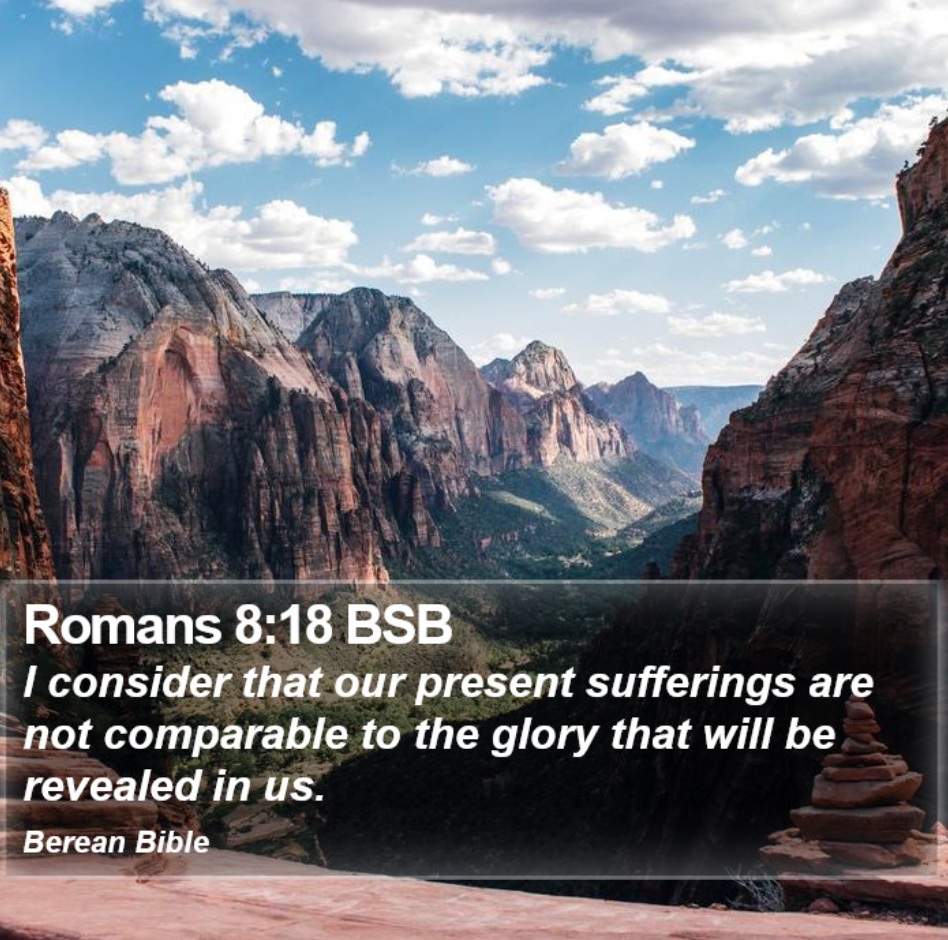
For I reckon that the sufferings of this present time are not worthy to be compared with the glory which shall be revealed in us (Romans 8:18).
Moses weighed the affliction that he suffered with the people of God and compared it with the reward that awaited him in heaven. He saw that the value of the eternal reward far outweighed the temporary affliction. He looked “at others with their lands and gold” and thought that Christ had promised him “His wealth untold.” He realized that “money cannot buy” his “reward in heaven” nor his “home on high.”
By faith Moses, when he was come to years, refused to be called the son of Pharaoh’s daughter; Choosing rather to suffer affliction with the people of God, than to enjoy the pleasures of sin for a season; Esteeming the reproach of Christ greater riches than the treasures in Egypt: for he had respect unto the recompense of the reward (Hebrews 11:24-26).
Would you trade your worst problems for your greatest blessings? Would you give up the promise of eternal life for the eradication of your temporary grief or pain? Would you exchange your life itself for the luxury of not having a flat tire? Would you give up the love of your family in exchange for a day without disrespect or unkindness from others?
Would you trade (fill in the blank with any of your greatest blessings) ____________________________________ for the removal of (fill in the blank with any of your worst problems) ____________________________? No, you would not. Your blessings always outweigh your problems.
For our light affliction, which is but for a moment, worketh for us a far more exceeding and eternal weight of glory; While we look not at the things which are seen, but at the things which are not seen: for the things which are seen are temporal; but the things which are not seen are eternal (2 Corinthians 4:17, 18).
— Via The Auburn Beacon, Volume 1, Issue 6, December 6, 2009
——————–
-3-
Psalm 119:73-80
Yodh
73Your hands have made me and fashioned me; give me understanding to learn Your commandments.
74May those who fear You see me and rejoice, for I have hoped in Your word.
75I know, O LORD, that Your judgments are righteous, and that in faithfulness You have afflicted me.
76May Your loving devotion comfort me, I pray, according to Your promise to Your servant.
77May Your compassion come to me, that I may live, for Your law is my delight.
78May the arrogant be put to shame for subverting me with a lie; I will meditate on Your precepts.
79May those who fear You turn to me, those who know Your testimonies.
80May my heart be blameless in Your statutes, that I may not be put to shame.
— Berean Standard Bible
______________
The Steps That Lead to Eternal Salvation
1) Hear the gospel — for that is how faith comes (Rom. 10:17; John 20:30-31).
2) Believe in the deity of Jesus Christ, the Son of God (John 8:24; John 3:18).
3) Repent of sins. For every accountable person has sinned (Romans 3:23; Romans 3:10), which causes one to be spiritually dead (Ephesians 2:1) and separated from God (Isaiah 59:1-2; Romans 6:23). Therefore, repentance of sin is necessary (Luke 13:5; Acts 17:30). For whether the sin seems great or small, there will still be the same penalty for either (Matt. 12:36-37; 2 Cor. 5:10) — and even for a lie (Rev. 21:8).
4) Confess faith in Christ (Rom. 10:9-10; Acts 8:36-38).
5) Be baptized in water for the remission of sins (Mark 16:16; Acts 2:38; 22:16; 1 Pet. 3:21). This is the final step that puts one into Christ (Gal. 3:26-27). For from that baptism, one is then raised as a new creature (2 Cor. 5:17), having all sins forgiven and beginning a new life as a Christian (Rom. 6:3-4). For the one being baptized does so “through faith in the working of God” (Col. 2:12). In other words, believing that God will keep His word and forgive after one submits to these necessary steps. And now as a Christian, we then need to…
6) Continue in the faith by living for the Lord; for, if not, salvation can be lost (Matt. 24:13; Heb. 10:36-39; Rev. 2:10; 2 Pet. 2:20-22).
——————–
Tebeau Street
CHURCH OF CHRIST
1402 Tebeau Street, Waycross, GA 31501
Sunday: 9 a.m. Bible Classes (except for last of the month Song Service)
and 10 a.m. Worship Service
Wednesday: 7 p.m. Bible Classes
evangelist/editor: Tom Edwards (912) 281-9917
Tom@ThomasTEdwards.com
https://thomastedwards.com/go/all.htm (This is a link to the older version of the Gospel Observer website, but with bulletins going back to March 4, 1990.)
Recent Comments